

Last updated September 10, 2026
Full 25-point door and opener safety check with every visit - springs, cables, rollers, tracks, and your LiftMaster or Chamberlain opener included
You get a price before we start. It does not change when the truck arrives.
 Before
 After
After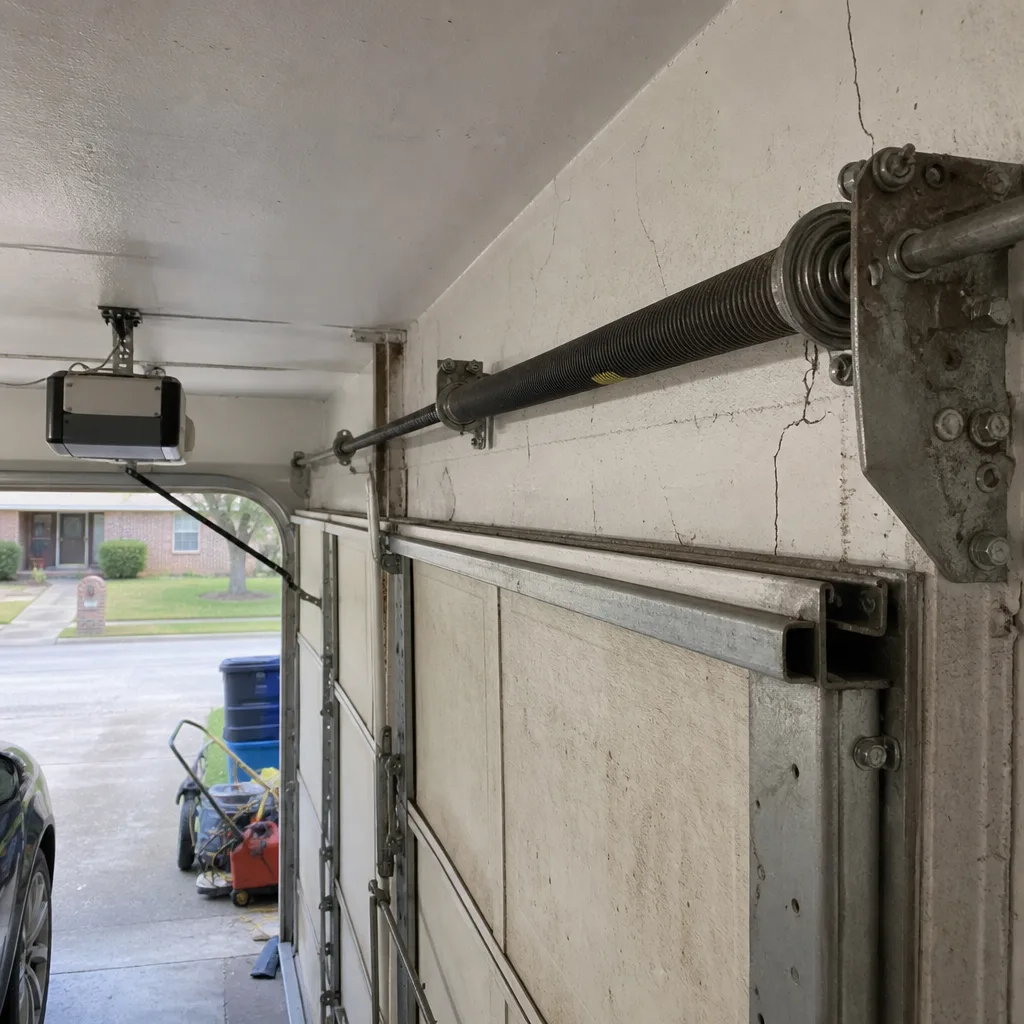 Before
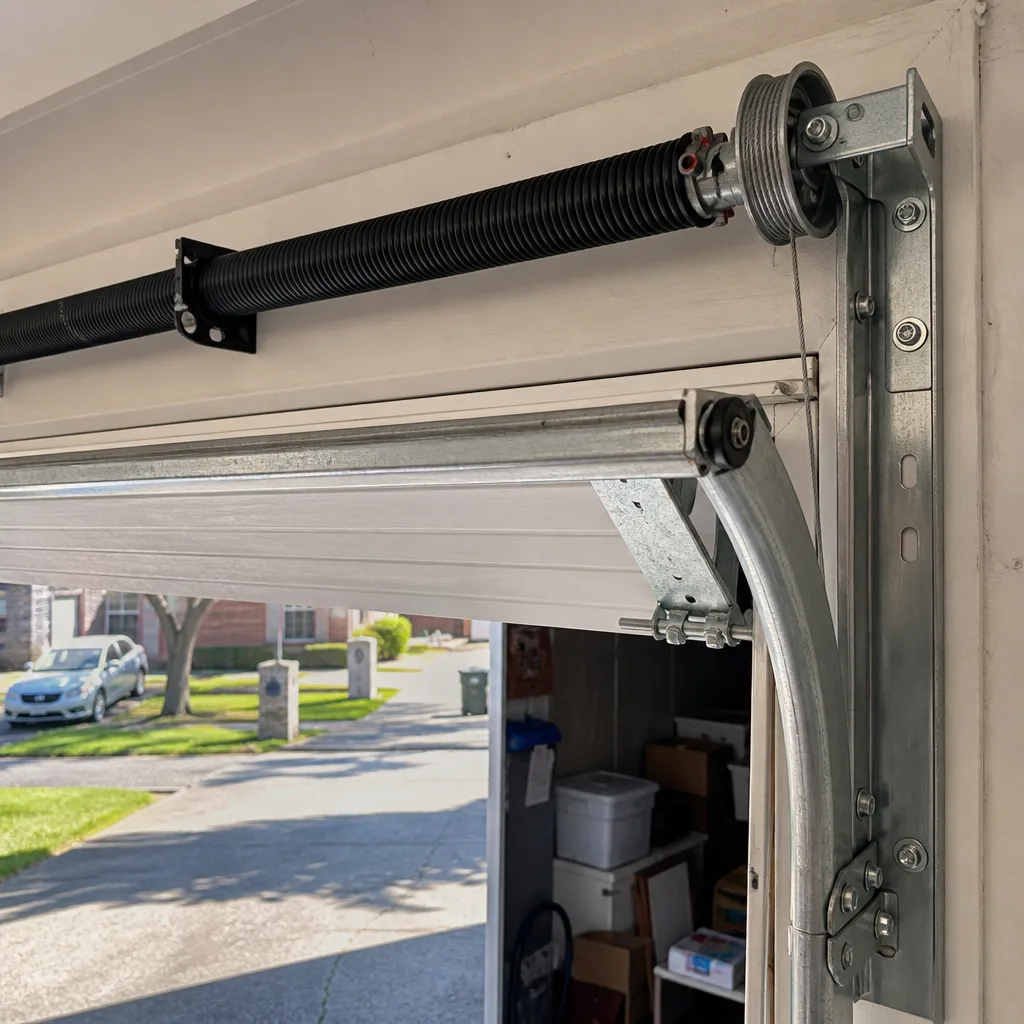 After
After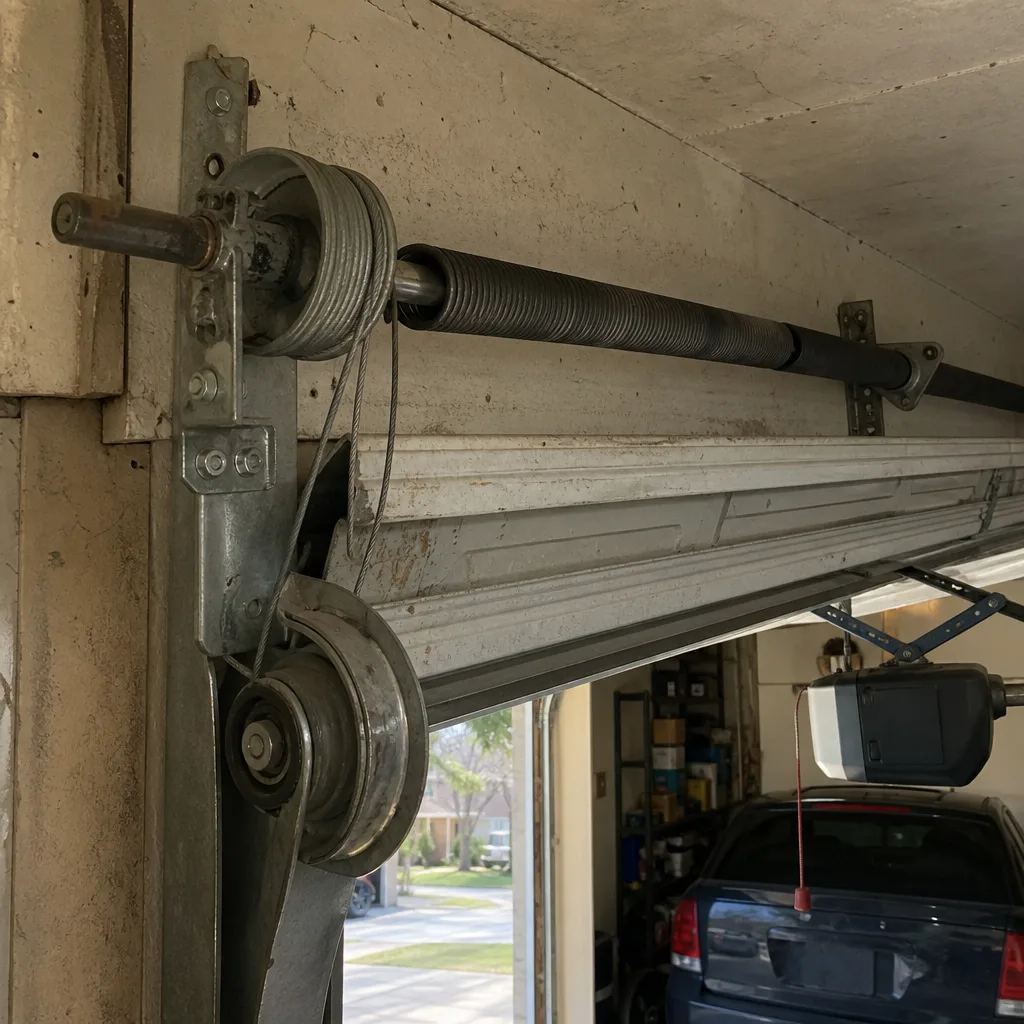 Before
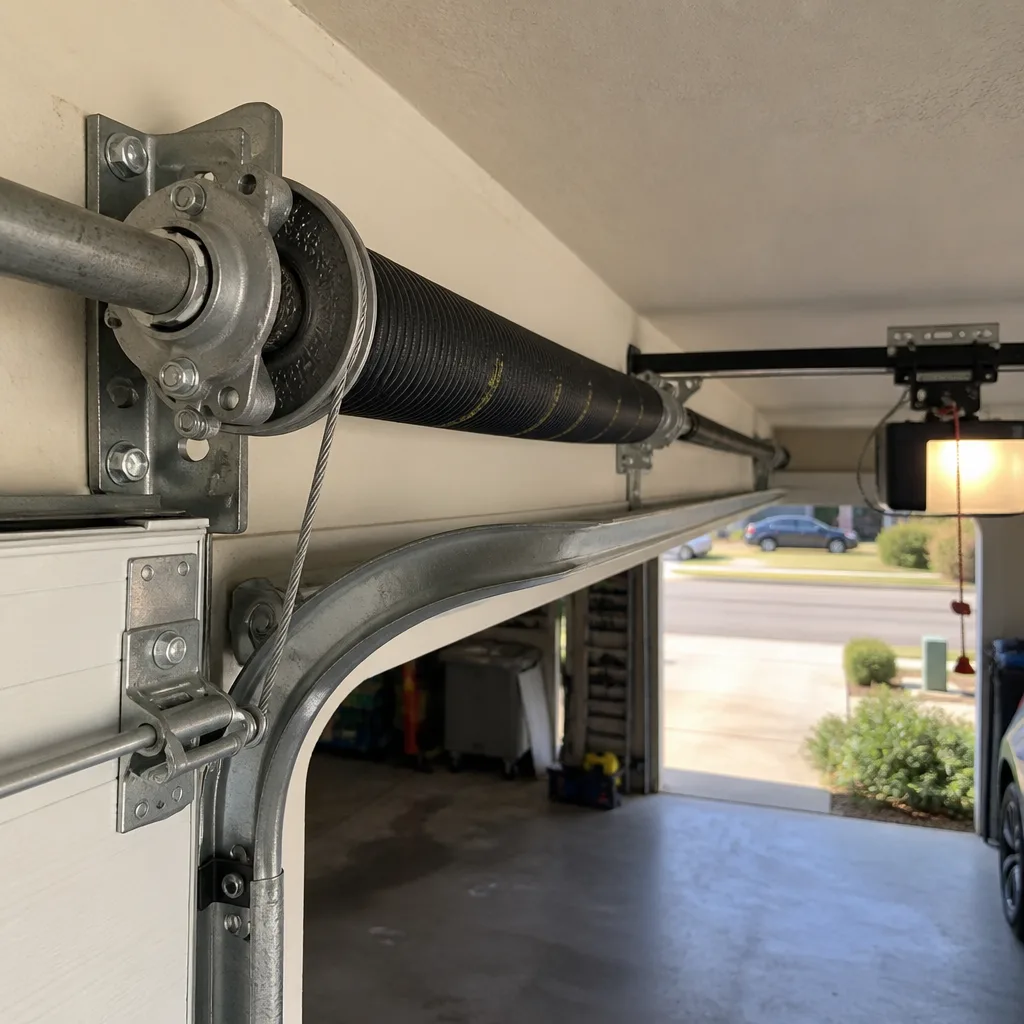 After
AfterGarage Door Permits, Codes & Inspections in TX: What You Need to Know
A Garland homeowner nearly lost a home sale last year over a garage door. The buyer’s title company flagged a door replacement from two years prior, one the seller had been told was “permit-free.” It wasn’t. Not because of the door itself, but because the install included a new opener on a circuit that had never existed before. That’s the thing about garage door work in Texas: most of it genuinely doesn’t require a permit, but the exceptions are specific, and they’re expensive when you miss them. This guide walks you through exactly where the line is in Garland, what inspectors actually check, and how to avoid closing-day surprises. For related reading, see our Garage Door Warning Signs: A Garland Homeowner’s Reference Guide.
Quick Answer
Most garage door replacements in Garland, Texas do not require a building permit, as long as you’re swapping a door of the same size without modifying the structural opening, header, or electrical system. A permit is typically required when the header is altered, the opening is widened, a door is added where one didn’t exist, or 120-volt wiring for an opener is run to a garage that was previously manual. Always confirm with Garland’s Building Inspection Department before cutting lumber or pulling wire.
Table of Contents
- When Garland Actually Requires a Permit
- Texas State Code vs. Garland Amendments: Where They Differ
- What Garland Inspectors Actually Look For
- Unpermitted Work and Home Sales: The Real Liability
- HOA Overlay Rules in Garland-Area Subdivisions
- Step-by-Step: How to Pull a Garage Door Permit in Garland
- Common Mistakes to Avoid
- When to Call a Professional
- Frequently Asked Questions
- The Bottom Line
When Garland Actually Requires a Permit
The rule of thumb in Garland is simple: a like-for-like swap doesn’t need a permit. Pull the old 16×7 door off, bolt a new 16×7 door onto the same tracks and same opening, and the city doesn’t want to hear about it. We do this kind of replacement all the time, and the only paperwork involved is the invoice and the 90-Day Done Right Promise we put on it. But the moment you change the opening itself, run electrical, or touch the framing above the door, you’ve entered permit territory.
Here’s exactly what triggers a permit in Garland:
- Header modification: Any change to the beam above the door opening. If you’re raising the ceiling, installing a taller door, or re-engineering the header to accommodate a different spring system, you need a structural permit and likely an engineer’s letter.
- Widening the opening: Taking a single-car door to a double-car door, or even widening an 8-foot opening to 9 feet, means cutting into load-bearing wall framing. Garland inspectors will want to see the header sizing calculation.
- Adding a door where one didn’t exist: Converting a carport to an enclosed garage, or adding a second garage door to an existing garage, is new construction in the city’s eyes.
- Electrifying a previously manual door: Running a new 120-volt circuit from your panel to a garage door opener, when there was no opener power before, requires a rough electrical inspection and possibly a service-upgrade review.
- Fire-rated door replacement between garage and living space: The pedestrian door from the garage into the house, not the big vehicle door, has fire-rating code requirements. Replacing that door with a non-rated unit is a build code violation in most Garland single-family zones.
What doesn’t trigger a permit: replacing an existing opener with another opener on an existing circuit, swapping out springs, rollers, cables, hinges, sensors, or the door itself when dimensions don’t change. If we replace your Garage Door Repair in Garland with a same-size panel door, there’s no city filing involved. That’s the majority of what we handle in this county.
One nuance worth stating plainly: Garland is a home-rule city with its own adopted building code. The city’s threshold for what constitutes a “repair” versus “alteration” is stricter than the state’s baseline. A door replacement that’s a repair in Dallas might be classified as an alteration in Garland if insulation or wind-load rating changes the door’s weight class. When in doubt, call Garland’s Building Inspection Department. The phone call takes five minutes and could save you a retroactive inspection down the road.
Texas State Code vs. Garland Amendments: Where They Differ
Texas adopts the International Residential Code (IRC) as its statewide minimum standard, and cities cannot weaken it. They can, however, add local amendments, and Garland has several that affect garage doors indirectly but meaningfully.
At the state level, the IRC requires that any garage door installed in a residential structure meet wind-load standards for the region. Dallas County falls into a moderate wind zone, which means most standard doors from Clopay, Amarr, and Wayne Dalton meet the requirement out of the box. The state also mandates that any attached garage be separated from living space by either 1/2-inch drywall or the equivalent, including the ceiling, and that the door from the garage to the house be either solid wood, solid-core steel, or a rated honeycomb door with a self-closing hinge.
Garland’s local amendments go further in a few specific places:
- Opener outlet placement: The city requires the 120-volt outlet for a garage door opener to be on a dedicated circuit and located specifically on the ceiling within six feet of the opener head, GFI-protected. Some surrounding cities allow an existing wall outlet to serve the opener; Garland’s inspectors look for the ceiling outlet.
- Header clearance inspection on door changes: When a permit is required, Garland inspectors measure the actual clearance between the top of the door’s travel path and the ceiling structure. They’re checking for spring bracket clearance and opener rail angle, not just visual clearance.
- Wind-load documentation: For doors over 10 feet wide, Garland’s building official may ask for the manufacturer’s wind-load certification for the specific door model, not just the generic product line sheet. This is a paperwork step that trips up homeowners who order doors online without technical documentation.
- Hail and impact damage re-inspection: After a major hail event, Garland’s code enforcement division has been known to flag garage doors with visible panel damage on renewal of rental registrations. It’s not a permit issue per se, but it can become a required repair before a property transaction closes.
The practical takeaway from all of this: don’t assume that what worked in a neighboring city works in Garland. And don’t assume that a big-box store’s standard installation package includes everything Garland requires. Several national companies sell installation with a door purchase, then discover the opener circuit isn’t compliant and leave homeowners to deal with the city themselves. We don’t work that way. We’re locally owned and owner-operated, and we’ve been doing Garage Door Installation in Garland since 2004. The name on the van is the same name on the license.
What Garland Inspectors Actually Look For
If a permit is required for your garage door job, the city will send an inspector at two stages: rough-in and final. Most homeowners have never seen a garage door rough-in inspection, and they’re surprised by what gets checked. Here’s what Garland’s inspectors focus on, in order of how often I see them flag something:
1. Header condition and sizing
The inspector wants to see the actual dimensional lumber or engineered beam carrying the load above the garage opening. If you’re widening an opening, they’ll check the span tables, the number of jack studs, and the bearing plate. They will also look for signs of existing stress: cracks radiating from the corners of the opening, sag, or previous fire damage. Older Garland homes, especially those built in the 1960s and 1970s around the Lake Ray Hubbard area, often have headers that were sized for the original 8-foot door. Trying to hang a heavier modern door on that framing without verification is a structural gamble. A door is 200 pounds riding on two springs. Respect it.
2. Fire separation between garage and house
The IRC and Garland’s amendment both require that any wall or ceiling between an attached garage and a living area maintain a fire separation rating. Inspectors check that the drywall is intact, that any penetrations (pipes, conduit, wiring) are properly sealed with fire-rated caulk, and that the pedestrian door from garage to house is self-closing and solid-core. When we do a Garage Door Opener in Garland install that involves running new wiring through the garage ceiling, we pay attention to the drywall integrity because the inspector will notice if we’ve left a hole unpatched. It’s not just about the door; it’s about the whole assembly.
3. Opener circuit and GFI outlet
The outlet powering the opener head must be GFI-protected and on its own circuit. Garland inspectors are specific about this: a shared circuit with any exterior load, any bathroom load, or any kitchen load is a fail. If the original house pre-dates GFI requirements, the inspector may require upgrading that circuit even though your door installation didn’t touch it. Electricians call this “scope creep” but it’s code, and it’s there because garage door openers are motor loads that can trip shared circuits and leave a two-car garage door half-open at night.
4. Safety sensor placement and operation
The photoelectric sensors at the bottom of the door tracks, the ones that reverse the door if a child or a dog crosses the threshold, must be mounted no higher than six inches above the floor and must be wired so that any interruption reverses a closing door. Garland inspectors test this during a final inspection by simply blocking the beam with a clipboard. Doors installed without functional sensors fail. This is standard federal law under UL 325, but local inspectors enforce it actively.
5. Emergency release function
The red-handled release cord on the opener must be accessible and functional, even with the door in the raised position. The inspector will pull it and verify that the door can be manually operated. This is a safety requirement, not a cosmetic one. A homeowner who has to climb on a ladder to reach the release during a power outage is living in a house that fails code.
Unpermitted Work and Home Sales: The Real Liability
In Texas, sellers are required to disclose unpermitted work on the Seller’s Disclosure Notice. Most never think about the garage door. But title companies in Dallas County have gotten increasingly thorough since about 2018, running permit-history searches on properties under contract. When a permit record that should exist doesn’t, it doesn’t matter how innocent the work was. The title company flags it. The buyer’s agent uses it as a negotiating tool. And the seller ends up paying for a retroactive inspection anyway, plus the risk of rush fees.
Here’s the uncomfortable math of a small unpermitted garage door electrical job:
- Retroactive permit fee: Double the original permit cost in many jurisdictions, including Garland, which has penalty multipliers for work completed without a permit.
- Inspection scheduling delay: Garland is a busy building department. A retroactive inspection might take two to four weeks. That’s a closing delay, and in Texas, closing delays cost real money in rate-lock extensions and moving logistics.
- Forced remediation: If the inspector finds the work wasn’t just unpermitted but also non-compliant, the seller pays to bring it up to code. That can mean rewiring an opener circuit, replacing a door that didn’t meet local wind-load requirements, or even rebuilding a header.
- Buyer’s leverage: Once the title company flags unpermitted work, a buyer can ask for a price reduction, a repair credit, or even walk. A $400 opener install that should have had a $75 permit can cost thousands on the back end.
The worst version of this story is the Garland homeowner I mentioned at the top of this guide. They replaced a manual garage door with an electric one in 2022. The installer ran a new circuit from the panel, told the homeowner it was all standard, and never mentioned permits. Two years later, on a Friday afternoon, the title company finds no electrical permit on record for that circuit. The buyer’s inspector notes the outlet isn’t GFI-protected anyway. The seller paid $2,400 to remediate and permit the circuit before closing. All of that was avoidable with one phone call to the city and an electrician who does things by the book.
If you have unpermitted garage door work on a house you’re selling, the fastest remediation is to call Garland’s Building Inspection Department, describe the work, and ask about a retroactive permit. Be honest. Inspectors appreciate honesty and are more likely to work with you on scheduling. And if the work was done by someone else, get an independent evaluation before the city shows up. We offer a Free Second Opinion on any written estimate, and if you’re in our home county, there’s no trip charge. Otto will tell you what’s actually wrong before any inspector gets involved. For help choosing the right professional, read How to Hire a Garage Door Contractor in Garland: A Step-by-Step Guide.
HOA Overlay Rules in Garland-Area Subdivisions
City permits are one layer. HOA covenants are another, and in Garland they’re often the more restrictive one. Several of the larger subdivisions and master-planned communities around Garland have architectural review committees with specific rules about garage door style, color, material, and even window placement. You can have a fully permitted, code-compliant door that still violates your HOA’s covenants, and the HOA can force you to change it.
Here’s where this actually shows up in Garland:
- Firewheel and the north Garland subdivisions: Several HOAs in the Firewheel area restrict garage doors to specific manufacturers and color palettes. A white door in a neighborhood that mandates wood-tone carriage style will get a violation letter, and the HOA has the authority to fine daily until it’s corrected.
- Lake Ray Hubbard waterfront communities: Homes on the lake often have HOA rules about door window panels and wind-rated glass, and some require hurricane-rated doors even though Garland is not in the coastal wind zone. You’ll pay a premium for a door you might not have chosen on your own.
- Older Garland neighborhoods without HOAs: Southwestern Garland and the Duck Creek area are mostly HOA-free, but individual streets sometimes have deed restrictions from the original plat that still run with the land. They’re harder to discover but they can be enforced.
Our advice, and it comes from doing this in Garland for over two decades: before you order any garage door, check two boxes. Start with our Garage Door Repair Maintenance Checklist for Garland Homeowners. First, call the city and ask whether your scope triggers a permit. Second, check your deed restrictions and, if you have an HOA, get written architectural approval. Written. Not verbal. The committee member who says “that’ll be fine” on a phone call might not be there in twelve months when a new board sends a violation letter. Get it on HOA letterhead or in an email chain before the door gets bolted on.
Step-by-Step: How to Pull a Garage Door Permit in Garland
If your job does require a permit, the process in Garland is straightforward. Here’s the numbered version:
- Determine your scope: Write down what’s changing. Door size? Header? Electrical? If you’re unsure, call the Building Inspection Department and describe the work. A five-minute call is free insurance.
- Gather documentation: You’ll need a site plan or drawing showing the existing opening and the proposed opening, the door specifications (manufacturer, model, dimensions, wind-load rating), and, if structural work is involved, an engineer’s letter or header sizing calculation.
- Apply: Garland accepts permit applications online through the city’s portal as well as in person at the Building Inspection Department on Main Street. Fees vary by scope: a simple electrical permit for an opener circuit is typically under $100; a structural alteration permit is more.
- Schedule rough inspection: If the job involves header work or new electrical, the rough inspection happens before drywall or finish work covers the work. Have the framing and electrical visible.
- Complete the work and schedule final inspection: The final inspection covers the door operation, sensor function, emergency release, and overall code compliance. Pass this and you’re done.
- Keep the paperwork: The final approved inspection and permit record should be kept with your closing documents if you ever sell the house. This is the proof that prevents the closing-delay scenario I described earlier.
Most of our customers never touch this process because their job doesn’t trigger a permit. But when it does, the process isn’t as scary as it sounds, and the alternative, a red-flagged title search, is much worse.
Common Mistakes to Avoid
- Assuming all garage door work is permit-free: Most is. Some isn’t. The difference is structural framing, opening dimensions, and new electrical circuits. If any of those three are involved, check with Garland first.
- Trusting a national installer who says “we handle everything”: Several national chains will install a door and new opener without pulling the required electrical permit, leaving the compliance problem in your lap. If a company can’t show you the permit paperwork for your address, ask harder questions.
- Ignoring HOA architectural review: City approval and HOA approval are two different things. A fully permitted door that violates HOA covenants is still a violation with daily fines.
- Skimping on the opener outlet: Running the opener off an extension cord or splicing into an existing garage circuit fails code in Garland. The inspector will flag it, and your homeowner’s insurance may not cover a later electrical fire if the source was unpermitted wiring.
- Replacing the garage-to-house pedestrian door with a hollow-core interior door: That door must be solid-core or fire-rated and self-closing. A hollow door fails Garland’s fire separation requirement and is one of the most common code violations inspectors note in older Garland homes.
- Throwing away the old door’s documentation: If you’re replacing a door under an insurance claim after hail or wind damage, your insurer may require proof of the old door’s rating. Take photos, keep the label from the old door, and save the paperwork.
- Not asking about the permit before signing the contract: When you get a quote for a garage door job, ask these three questions: Does this require a permit? Who pulls it? Is the permit fee included in the price? If the answer is vague, get a second opinion. We offer one for free.
When to Call a Professional
If your job involves header beams, structural openings, live electrical work, or anything touching the springs and cables that hold 200-plus pounds of tension, call a professional. Not because most homeowners can’t figure out the mechanics, but because the margin for error is measured in hospital visits. Torsion springs under tension are genuinely dangerous if mishandled. Electrical permits require an electrician or a licensed contractor who can pull the permit for the work. And the moment you’re dealing with a city inspection sequence, having someone who has done it a hundred times changes the experience. We’ve been in this county since 2004, and Otto is a palindrome: reads the same from either end, same as the door. If you’re in Garland and want a straight answer about whether your job needs a permit, call Otto’s Garage Door home at (945) 202-2600. Free estimates, no pressure, and we’ll tell you the truth even if the truth is that you don’t need us.
Frequently Asked Questions
No, not if you’re replacing it with a door of the same size on the same opening without touching the header or electrical. If the opening dimensions change, the header is altered, or new wiring is run, a permit is required. Call (945) 202-2600 and we’ll help you figure out which category you’re in.
Only if the installation requires running new 120-volt electrical wiring from the panel, such as for a garage that was previously manual. Replacing an existing opener on an existing dedicated circuit does not need a permit. A live person answers our phone around the clock if you’re unsure about your specific setup.
A simple electrical permit for an opener circuit typically costs under $100. Structural permits for header changes or opening enlargement cost more and depend on the scope of the work. The exact fee is set by Garland’s Building Inspection Department based on the valuation of the work.
Yes, it can. Title companies in Dallas County increasingly run permit-history searches, and unpermitted electrical or structural work on a garage door can be flagged, causing closing delays, forced remediation, or buyer negotiations. A $75 permit missed at install can cost thousands to remediate later.
Yes. Texas adopts the International Residential Code, which requires garage doors to meet wind-load standards for the region. Standard doors from manufacturers like Clopay, Amarr, and Wayne Dalton typically meet the requirement, but Garland may ask for the specific model’s wind-load certification on larger doors.
Any job we do that requires a permit gets one, pulled correctly and listed on your invoice. We’ll never tell you a job is permit-free when it isn’t, because our reputation in this county depends on it. Call (945) 202-2600 for a free estimate and we’ll tell you exactly what your job requires.
The Bottom Line
Most garage door work in Garland is genuinely permit-free, and that’s good news. The bad news is that the exceptions are specific, and missing them is expensive. If you’re changing the opening, touching the header, or running new electrical, you need a permit before the work starts. If you’re in an HOA, you need written architectural approval before you order the door. And if you ever sell your house, the absence of a permit record can cost you more than the job itself. Do it right the first time. We’ve been doing it right in Garland since 2004, and we’re happy to walk you through it, whether you hire us or not. Browse more guides & resources on our blog.
Written by Otto Reinhardt, Owner at Otto’s Garage Door, serving Garland since 2004.