

Last updated September 10, 2026
Full 25-point door and opener safety check with every visit - springs, cables, rollers, tracks, and your LiftMaster or Chamberlain opener included
You get a price before we start. It does not change when the truck arrives.
 Before
 After
After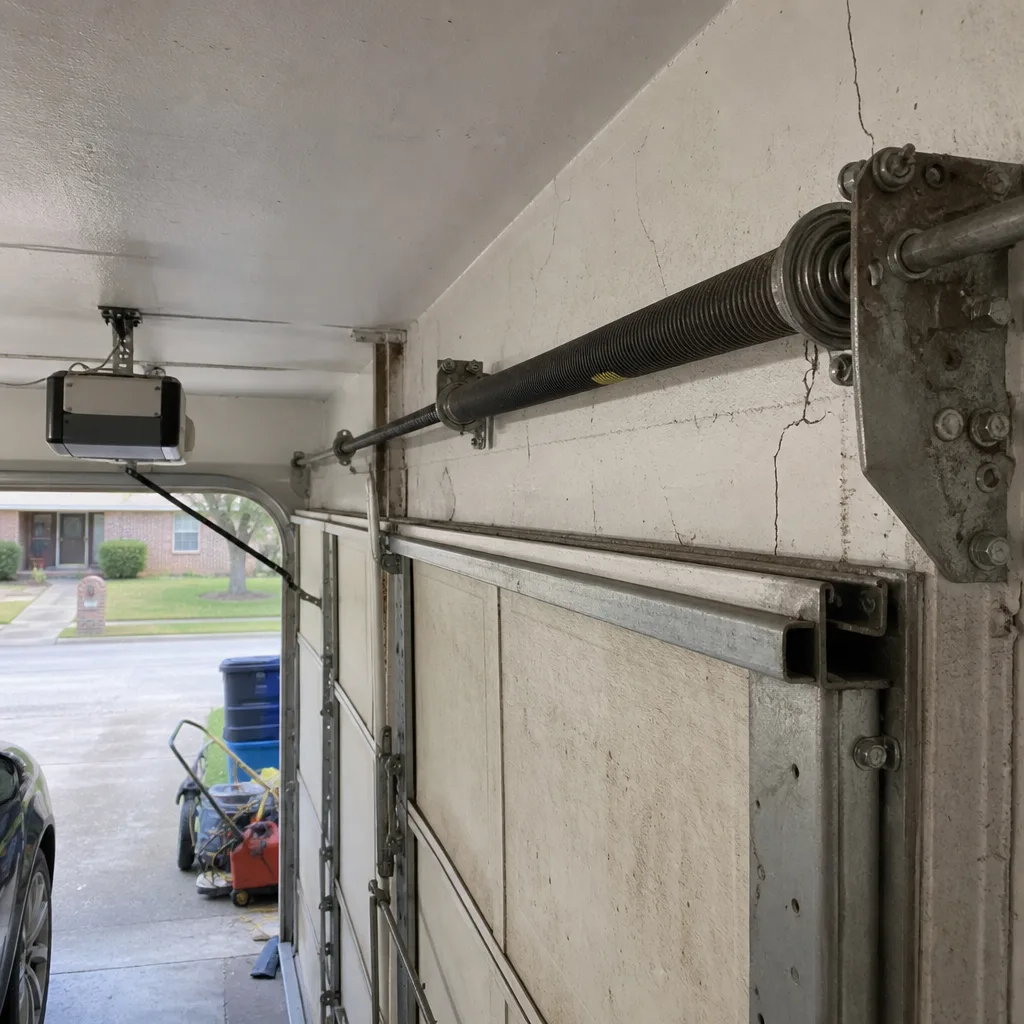 Before
 After
After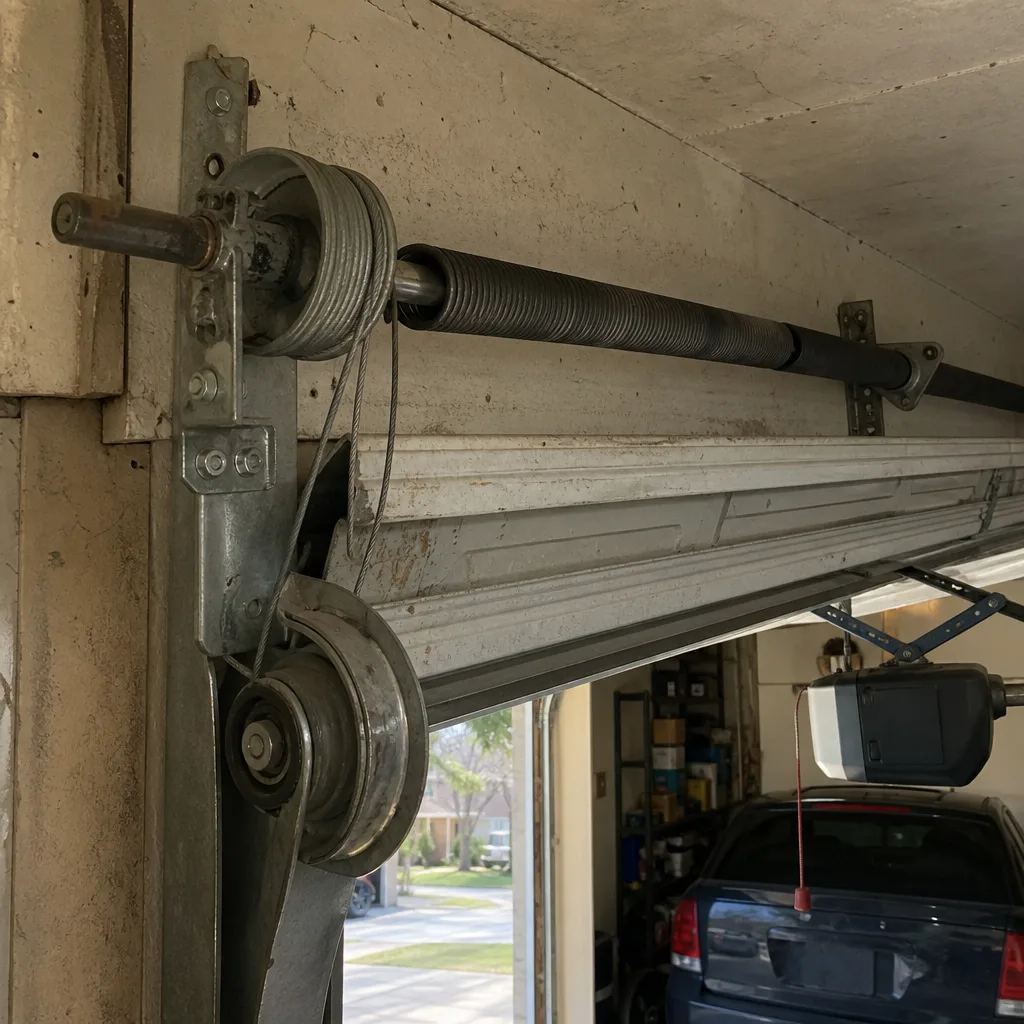 Before
 After
AfterSeasonal Garage Door Care for Garland: Year-Round Homeowner’s Guide
The February 2021 freeze cracked more garage door bottom seals and busted more rollers in North Texas than the previous five years combined, and almost none of it would have happened with one twenty-dollar prep step done in January. Garland doesn’t have four seasons so much as three: brutal summer, ice-storm winter, and a brief window in spring and fall where you can actually work outside. Each one creates a different failure mode for garage doors, and this guide maps the specific maintenance tasks to Garland’s actual climate calendar instead of handing you generic advice written for Minnesota. You’ll learn which months matter for which jobs, what a heat-fatigued spring sounds like before it snaps, and the two-step fix for humidity-swollen panels that doesn’t require a new door.
Quick Answer
Seasonal garage door care in Garland comes down to three windows: spring lubrication and track checks before the summer heat hits, a pre-freeze bottom seal and weatherstrip inspection in November, and a post-ice-storm roller and cable inspection after any hard freeze. The thirty-minute tasks done in the right month prevent ninety percent of the emergency calls we run in July and February.
Table of Contents
- Garland’s Climate Calendar: What Your Door Actually Faces
- Spring Maintenance: The Pre-Summer Checklist That Prevents July Breakdowns
- Summer Heat and Torsion Springs: Why 100-Degree Days Age Your Springs Faster
- The Lubricant Problem: What Works in North Texas Temperature Extremes
- Fall Prep: Timed to Garland’s Actual First-Freeze Window
- Winter Ice Events: What Freezes, What Breaks, and What to Check After
- Humidity Whipsaw: Why Wood Composite Panels Swell and Bind in Garland
- The Easy Access Window: Jobs That Require Moderate Temperatures
- Common Mistakes to Avoid
- When to Call a Professional
- Frequently Asked Questions
- The Bottom Line
Garland’s Climate Calendar: What Your Door Actually Faces
A garage door in Garland endures temperature swings of forty degrees in a single day during spring, sustained triple-digit heat for weeks on end in summer, and the occasional arctic blast that drops everything to single digits for four days straight. The materials in your door, from the torsion springs to the bottom seal to the panel adhesive, respond to each of these differently. What makes Garland’s climate uniquely hard on garage doors isn’t any single extreme, it’s the whipsaw between extremes.
Here’s what your door faces in a typical Garland year:
- June through September: Sustained highs above 95°F with garage interior temperatures routinely reaching 120°F or higher. This is when torsion springs lose temper and opener circuit boards overheat.
- October through November: Rapid temperature swings between 40°F and 80°F. Metal expands and contracts daily, which is when loose hardware starts rattling and track alignment drifts.
- December through February: Periodic hard freezes, sometimes with ice accumulation. Rubber seals stiffen and crack, nylon rollers get brittle, and moisture penetrates small gaps which then freeze and expand.
- March through May: The humidity ramp-up. Average relative humidity climbs from around 60 percent to over 75 percent, and wood composite panels absorb moisture and swell.
Understanding this calendar is the difference between a door that runs quietly for fifteen years and one that needs a replacement spring every three. When I walk up to a door in Garland, I can usually tell by looking at it what season the previous owner ignored.
For a full breakdown of the most common repairs we run across this city, see our Garage Door Repair in Garland page.
Spring Maintenance: The Pre-Summer Checklist That Prevents July Breakdowns
The single most important maintenance window in Garland is April and early May. It’s warm enough to work comfortably, dry enough for lubricants and adhesives to set properly, and early enough that you’re fixing problems before the summer heat turns small issues into snapped springs. Here’s our step-by-step pre-summer checklist, in priority order.
- Lubricate every moving part. The torsion springs, both hinges on every panel, the roller stems, and the opener chain or belt. Garage door lubricant, not WD-40. WD-40 is a penetrant, not a lubricant. It cleans gunk but doesn’t leave a durable film. We cover the right products in the lubricant section below.
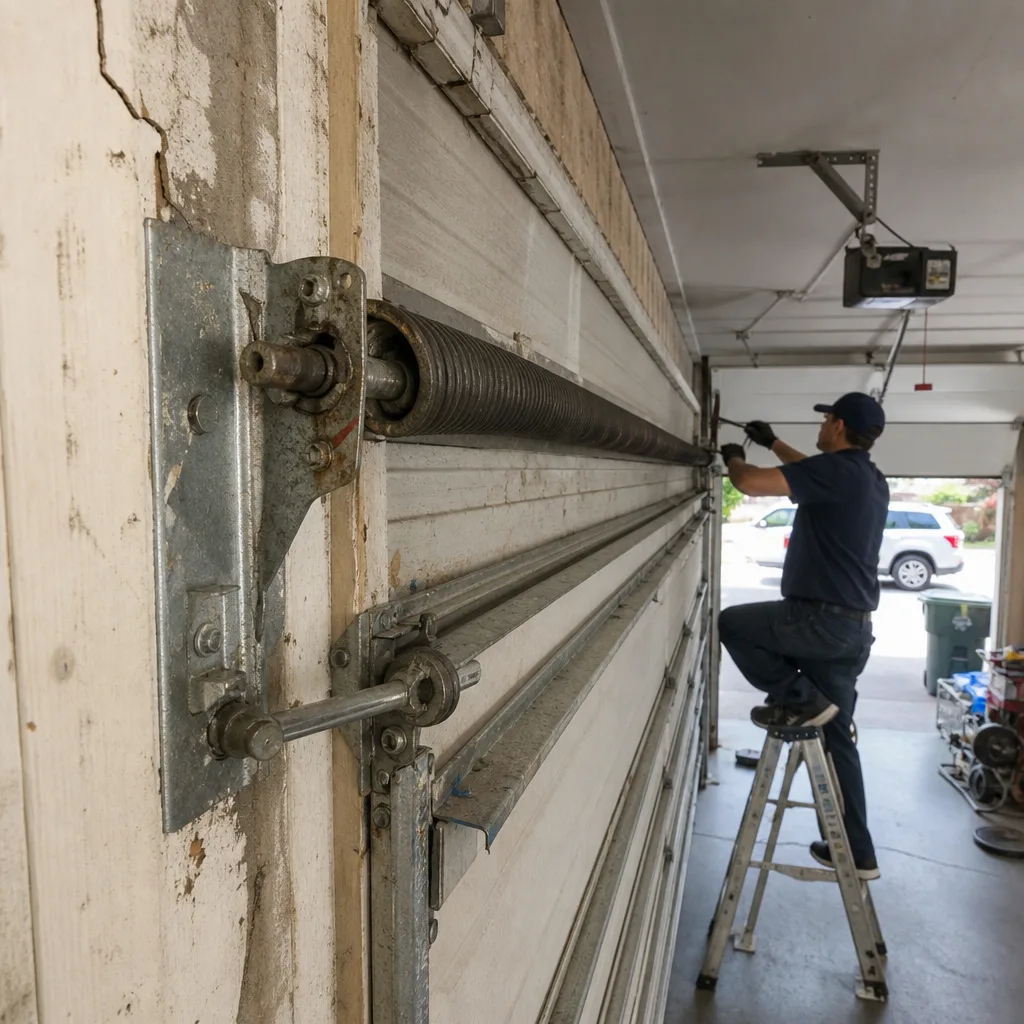
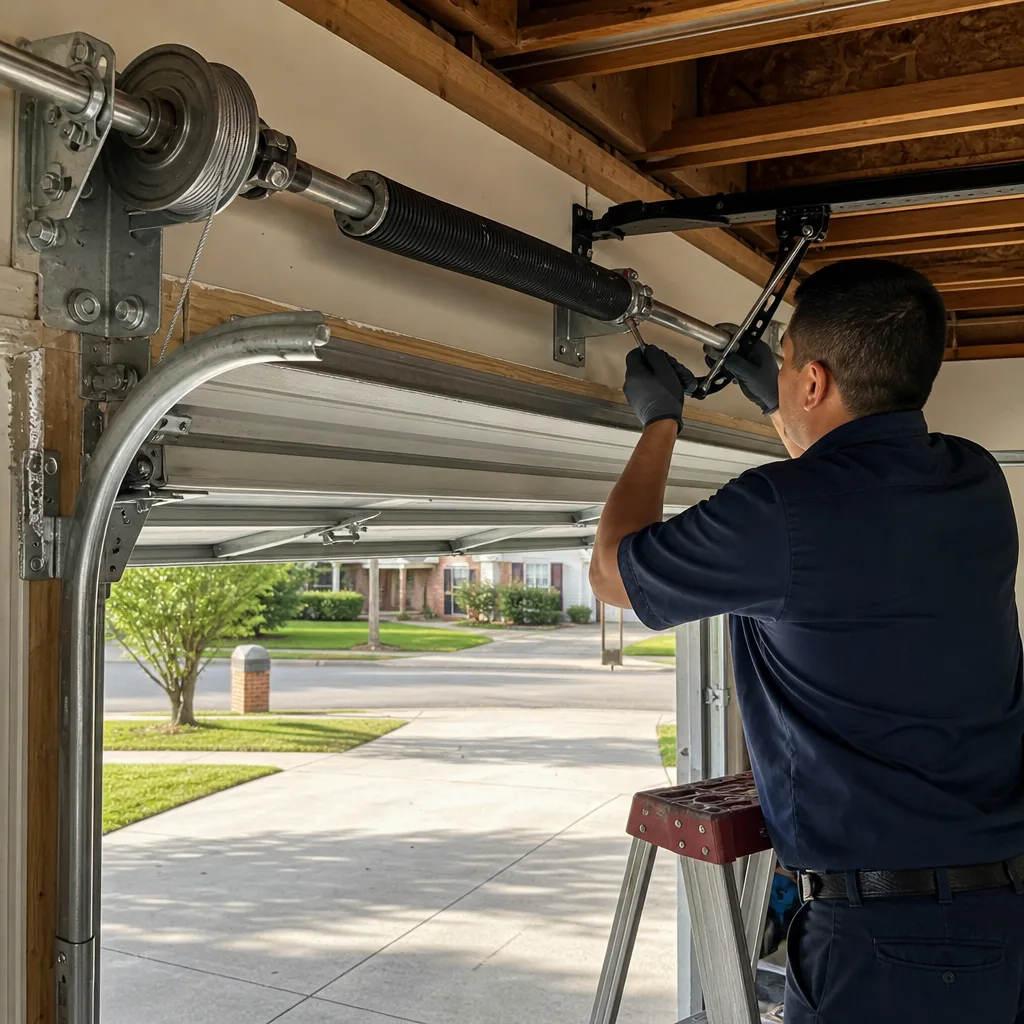
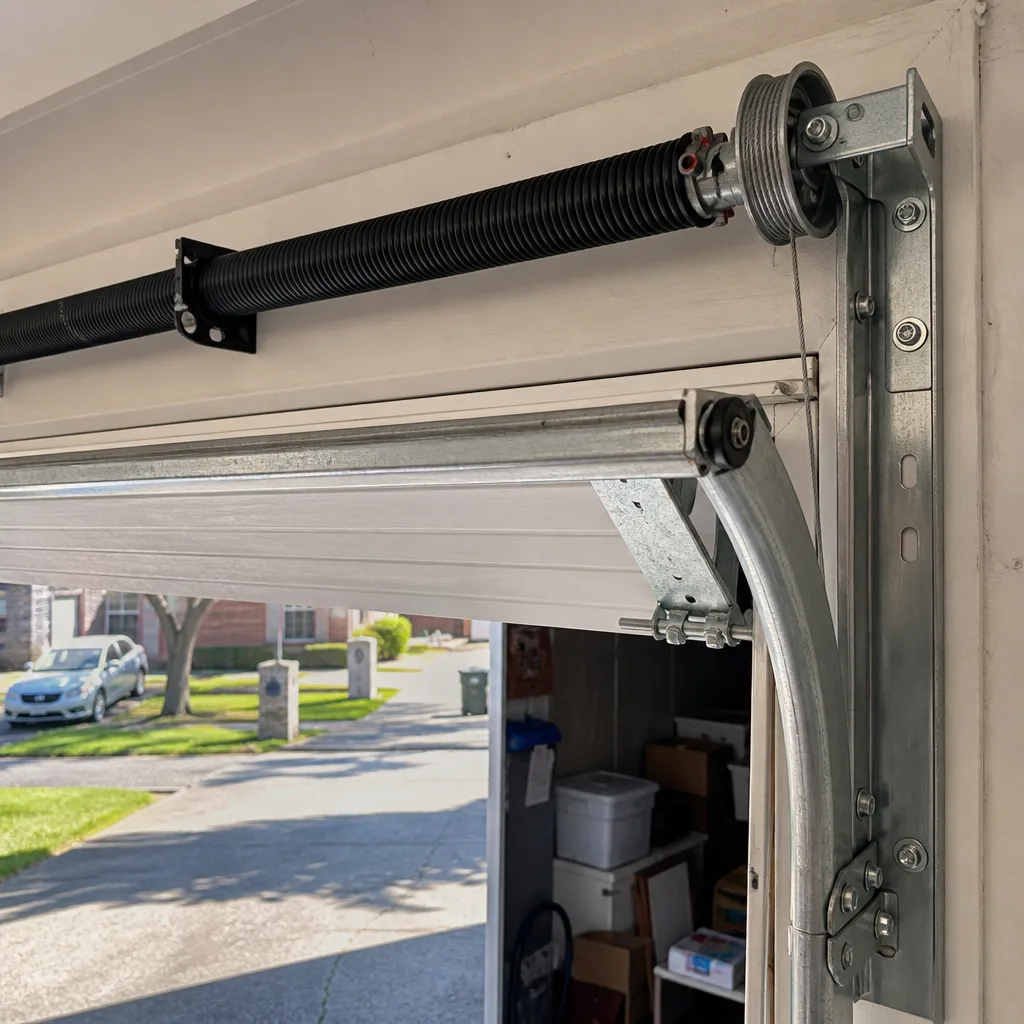
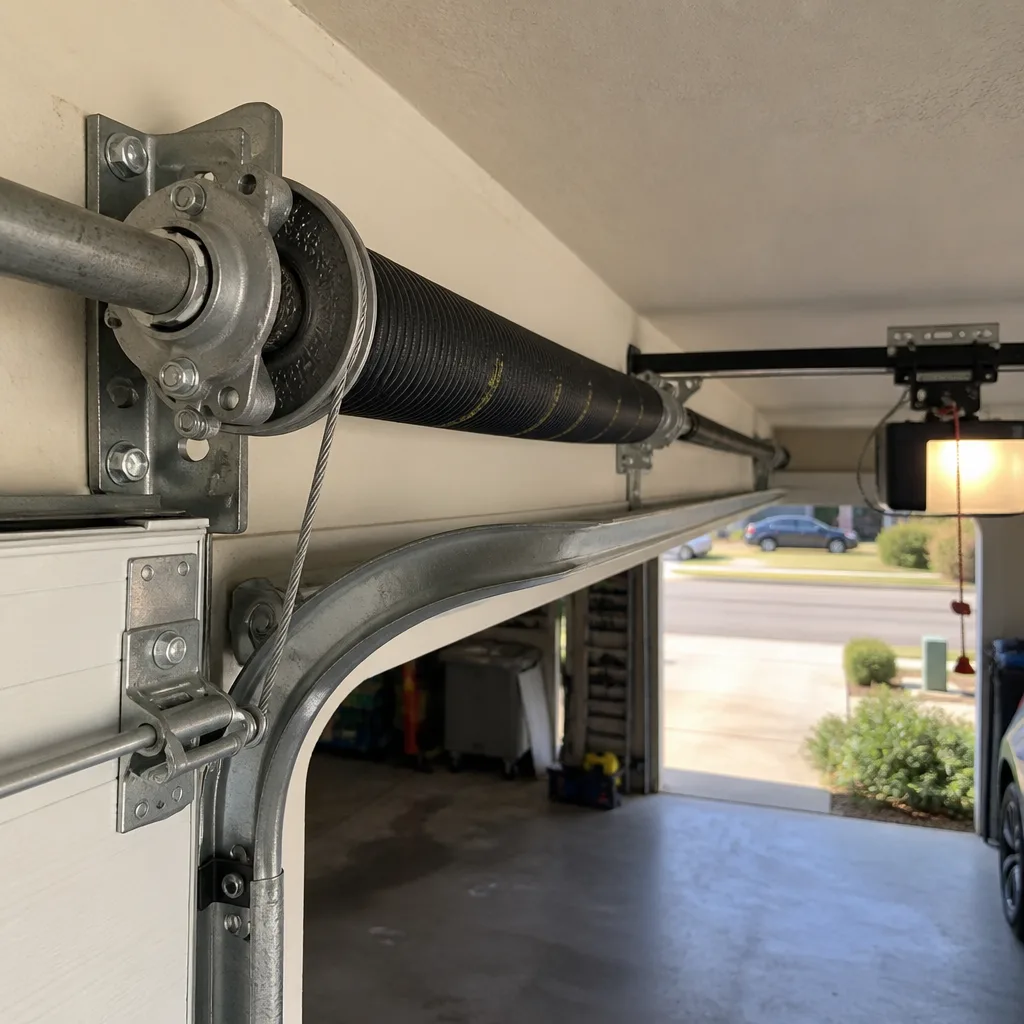
- Inspect the torsion springs for gaps and elongation. A healthy spring sits tight against itself with no visible separation between coils. If you see gaps starting to open in any coil, that spring is heat-fatigued and on its way out. A spring that’s lost tension will also be slightly longer on one side than the other if you have a two-spring setup.
- Test the auto-reverse safety sensors. Garland homes built before 1993 were the last ones required to have doors without them, but sensors fail all the time regardless of home age. Close the door and wave a broom handle under it. If it doesn’t reverse within two seconds of contact, that sensor needs attention before a kid or pet tests it for real.
- Check every bolt and bracket. Grab a socket wrench and check the track brackets, the opener mounting bolts, and the hinge screws. Garland’s spring temperature swings loosen everything, and a loose track bracket under tension is a serious safety hazard. A two-hundred-pound door falling off a track will hurt someone.
- Clean the tracks and check for wear marks. Use a rag and basic degreaser on the vertical tracks. If you see deep scoring or shiny wear lines, the rollers are misaligned and the door is dragging. That drag is what burns out opener motors in August.
Spring is also the right time to test your door balance. Pull the release handle while the door is closed and lift it manually. A properly balanced door will lift smoothly to about waist height and stay there without any help from you. If it drops or shoots up, the springs aren’t doing their job and the opener is carrying the weight. That’s an emergency waiting for a hot afternoon.
If you’re not comfortable with any of these steps, call a professional before making things worse. Otto’s Garage Door has served Garland since 2004, and I’d rather walk you through a check on the phone than show up to fix a door that a YouTube tutorial made worse. Our Garland garage door team answers live around the clock.
Summer Heat and Torsion Springs: Why 100-Degree Days Age Your Springs Faster
Here’s a fact most Garland homeowners never hear: a torsion spring installed on a west-facing garage door in Garland has a realistic service life of five to seven years, not the ten to twelve the spring manufacturer stamps on the package. The reason is sustained heat. Torsion springs are made of high-carbon steel that’s been heat-treated to hold a specific temper. That temper is what lets the spring store and release thousands of pounds of torque without deforming. In a Garland summer, the air inside an attached garage can hit 120°F, and the metal spring sitting above your car is absorbing that heat day after day for four months straight.
Heat doesn’t melt steel, but it slowly relaxes the temper, which reduces the rate the spring is rated for. A spring designed for ten thousand cycles might only deliver seven thousand in a Garland garage that bakes all summer. Spring cycles are the mileage of your garage door. Every open and close is one cycle, and the average family puts about four hundred cycles a year on a door. Do the math from there.
Early warning signs of a heat-fatigued spring, in the order they appear:
- Loud bang during opening. A well-lubricated spring doesn’t bang. That sound is the spring binding and releasing as it rotates. It means uneven wear and an active stress point.
- Gaps between coils. Hold a flashlight on the spring with the door closed. If you see spacing between any two coils, the spring has stretched permanently and lost temper.
- Door feels heavy when you lift it manually. This is the biggest tell. A balanced door lifts with one hand. A heavy door means the spring is doing less and less of its job.
- One side of the door sits lower than the other. Two-spring systems share the load. When one spring weakens faster, the door tilts at the bottom.
- Silicone-based spray lubricant intended specifically for garage doors. It stays viscous from -50°F to 350°F, which covers everything Garland has ever thrown at us. DuPont, 3-in-1, and Blaster all make acceptable formulas. Spray it on springs, hinges, roller stems, and the opener chain.
- White lithium grease for the torsion spring bearings and the opener rail. It holds up better under sustained heat than standard grease and won’t run off in July.
- Graphite powder for the keyed lock and any padlock on your door. Graphite doesn’t thicken in cold the way oil-based lubricants do, which matters for that February morning when the lock is frozen and you’re already late.
- WD-40. We’ve said it once and we’ll say it again: it’s a penetrant, not a lubricant. It dissolves old grease and then evaporates, leaving the part drier than before.
- Any heavy oil or axle grease. In August, it melts and drips onto the panels, the car, and your floor. In February, it thickens to the consistency of peanut butter.
- Motor oil or cooking oil. Both attract dust. Garland’s summer dust storms will turn an oiled track into grinding paste inside a week.
- Inspect the bottom seal. Run your hand along the rubber strip at the bottom of the door, both from inside and outside. Look for cracks, flattening, or gaps where the seal meets the floor. Garland’s summer sun bakes the rubber until it loses flexibility, and then the first freeze makes it crack. This is the twenty-dollar step that would have saved thousands of Garland doors in February 2021.
- Replace the seal if it’s compromised. A universal bottom seal costs between $15 and $30 at any hardware store in Garland, and installation takes about twenty minutes with the old seal slid out and the new one slid in. If your floor is uneven, some seals won’t sit flush. We see this a lot on older Garland homes with settled slab foundations. A proper fix is a thicker seal or a door bottom adjustment, and we can handle that in a single visit.
- Check the weatherstripping on all three sides. The side and top seals are usually nailed or stapled to the jamb. After ten Garland summers, the material shrinks and pulls away at the corners. Run your hand along the edges with the door closed and feel for daylight or drafts. Small gaps can be caulked; larger ones need new weatherstripping.
- Lubricate the springs and hinges one more time. Use the silicone spray from the previous section. A lubricated spring runs smoother and is less likely to bind and snap during a cold snap.
- Test the door balance again. Cold weather stiffens everything, and a marginally balanced door on a November afternoon can become a dead lift in February. If it’s heavy now, it will be worse when the cold sets in.
- Check the opener’s force settings. Most modern openers, including all current LiftMaster and Chamberlain models, have adjustable force limits. Cold weather increases the force needed to lift the door, and a force setting that was fine in July can cause the opener to reverse mid-cycle in February. This is the most common “my door opens halfway and stops” call we get every winter.
- Dry the panels thoroughly. Remove any visible surface moisture with a rag, then run a dehumidifier in the garage for two or three days. If you don’t have a dehumidifier, opening the garage for a few hours on a dry March afternoon helps. The goal is to pull the absorbed moisture out of the panel cores.
- Adjust the track spacing. The tracks that guide the door panels are bolted to the walls and can be shimmed slightly outward. An eighth-inch shim at the binding points gives the panels the clearance they need. This is a fifteen-minute adjustment for someone who works on doors regularly. Done wrong, it can throw the door off balance or cause the rollers to pop out of the track, so if you’re not confident, this is a job for a pro.
- Bottom seal replacement with adhesive-backed seals
- Track realignment and shimming
- Weatherstripping replacement on the side jambs
- Panel painting or refinishing on wood or composite doors
- Any repair involving epoxy or construction adhesive
- Opener installation, so the remotes and keypads can be programmed with the garage door open and comfortable
- Using WD-40 as a lubricant. We’ve said it twice already, but it’s the most common mistake we see in Garland garages, and it leads directly to worn rollers and snapping springs. WD-40 cleans; it doesn’t lubricate. Buy a real silicone garage door spray.
- Ignoring a noisy door because “it’s been doing that for years.” Noise is the earliest warning sign of spring fatigue, worn rollers, or a misaligned track. By the time the noise stops, the part has usually failed. If your door gets louder every year, something is wearing out.
- Forcing a frozen garage door open. After a Garland ice storm, the tracks freeze and the door won’t move. Forcing it bends the tracks, breaks panels, and strips opener gears. The fix costs more than all of those combined if you’re patient enough to chip and thaw first.
- Replacing the opener when the spring is the problem. A weak spring makes the door heavy, the opener strains, and the homeowner assumes the opener is bad. Replacing the opener without addressing the spring just burns out the new opener faster. This is the one that costs Garland homeowners the most money every year.
- Skipping the pre-freeze bottom seal check. A bottom seal costs less than thirty dollars and takes twenty minutes to swap. A cracked seal lets cold air, water, and rodents into your garage all winter and can lead to frozen tracks and broken panels. This is the single best return on investment in garage door maintenance in Garland.
- Doing track work in July or February. Metal behaves differently at temperature extremes, and work done in the wrong season won’t hold. If a track has been misaligned, schedule the fix for spring or fall when the measurement will actually stay accurate.
- Using a big-box store opener from the shelf without checking compatibility. Garage door openers are not universal. Horsepower, rail type, and brand compatibility all matter, and a mismatched opener fails early. If you’re not sure, this is a free question to ask over the phone. Call Otto’s Garage Door at (945) 202-2600 and we’ll tell you what works with your door, no charge for the conversation.
None of these symptoms fix themselves. A heat-fatigued spring will eventually snap, and it will almost always do it on the hottest day of the year, when the steel is warmest and the door is being cycled the most. The good news is that a spring replacement in Garland costs between $180 and $340 for a standard double-door setup, and we quote that price on the phone and hold it when we arrive. If you’re hearing the warning signs, the cheapest option is always to address it before the snap.
If your opener is straining against a weak spring, the problem is almost never the opener. Replacing the opener without replacing the spring is like putting a new engine in a truck with a blown transmission. We explain this in detail on our Garage Door Opener in Garland page.
The Lubricant Problem: What Works in North Texas Temperature Extremes
The wrong garage door lubricant in Garland does one of two things: it turns to varnish in July or it freezes solid in February. Both failures are worse than no lubricant at all, because a gunked-up roller stem creates drag and a frozen hinge creates resistance that snaps hardware. Here’s what actually works in our climate.
What to use:
What to avoid in Garland:
Lubrication frequency matters more than lubricant choice. In Garland, we recommend lubricating monthly in the summer (the heat burns off the carrier solvents faster) and every two to three months the rest of the year. A can of silicone garage door spray costs about twelve dollars and lasts a year. It is, dollar for dollar, the cheapest insurance policy your door will ever have.
Fall Prep: Timed to Garland’s Actual First-Freeze Window
Every generic garage door blog tells you to winterize in October. That’s bad advice for Garland. Our first hard freeze historically lands between late November and mid-December, and doing freeze prep six weeks early means the benefit is mostly gone by the time the cold actually arrives. The right window for Garland fall prep is the first two weeks of November. Here’s the step-by-step.
If you want us to handle any of this for you, Otto’s Garage Door installation team does full seasonal tune-ups on any existing door, not just new ones. A tune-up costs less than most people expect, and it includes everything on this list.
Winter Ice Events: What Freezes, What Breaks, and What to Check After
The February 2021 freeze was a stress test for every garage door in Garland, and most of them failed somewhere. The failures fell into predictable categories, and knowing what they are tells you what to check after any hard freeze.
Bottom seals crack and split. This was the most common failure by far. The rubber had been sun-baked all summer, the temperature dropped into single digits, and the seal became brittle. When the door cycled, the frozen seal snapped. It’s not structurally dangerous, but it lets in cold air, water, rodents, and leaves. A cracked seal is also an invitation for snakes in the spring, which we’ve seen more than once on Garland doors that back up to open lots.
Nylon rollers shatter. Rollers made of nylon or plastic get brittle in extreme cold. When the door is opened against the resistance of a frozen seal or an iced-over track, the roller wheels crack. This is why a door that worked fine before the freeze starts clunking and dragging the day after. Steel ball-bearing rollers, which cost about eight dollars each, solve this permanently.
Water in the tracks freezes and jams the door. This is an ice-storm specialty. Freezing rain coats the outside of the track, then more water runs down and freezes between the rollers and the track. The door is effectively glued shut. The fix is never force it open, not with the opener and not by hand. Forcing it bends the track and breaks panels. Chip the ice away gently, pour warm (not boiling) water on the frozen section, and test the door manually before using the opener.
Opener gears strip. When the opener tries to force open a frozen door and the force settings are too high, the plastic drive gear inside the opener strips. This is an inexpensive part on most Chamberlain, LiftMaster, and Genie models, but it requires opening the opener housing to replace. If your opener runs but the door doesn’t move after a freeze, this is almost always the cause.
After any hard freeze in Garland, run through this checklist: check the bottom seal for cracks, lubricate the rollers and hinges, test the door balance manually, and cycle the door three times while watching and listening for anything unusual. Catch the small damage now and you’ll avoid the big repair in March.
Humidity Whipsaw: Why Wood Composite Panels Swell and Bind in Garland
Wood composite garage door panels, which are common on homes across Garland built from the 1980s through the early 2000s, absorb moisture from humid air. In August, when the air is saturated but the panels are warm, the moisture stays manageable. In February and March, when cold panels meet damp air, the moisture condenses into the panel edges and the panels swell by a sixteenth to an eighth of an inch. Across a sixteen-foot door with four panels, that’s enough to make the door bind in the tracks and drag during operation.
The classic symptom is a door that runs fine all summer and then starts grinding or sticking on the first cold damp morning. If you look at the panel edges, you’ll see them chafing against the track. Some Garland homeowners get quoted a full new door for this condition. Here’s the two-step fix that often doesn’t require one:
For doors with panels that are thoroughly saturated, crumbling at the edges, or showing black fungal staining, the two-step fix won’t be enough. Those doors need to be replaced, and if you go that route, we walk through material options that handle Garland’s humidity better on our Garage Door Installation in Garland page. Steel sandwich panels with a thermal break have a closed-cell core that doesn’t absorb moisture, and they’ve become the standard choice in Garland for a reason.
The Easy Access Window: Jobs That Require Moderate Temperatures
Two jobs on your garage door genuinely cannot be done correctly in Garland’s summer heat or winter cold: seal adhesive and track realignment. Both require moderate temperatures for the materials to behave properly. The sweet spot is March through May and October through mid-November, before the first hard freeze.
Seal adhesive. The bottom seal on most modern Garland doors is not screwed on; it’s adhered with a construction adhesive or held in a channel with rubber friction. If you’re replacing a seal that’s held with adhesive, the adhesive needs temperatures between 50°F and 80°F to cure correctly. Apply it in July and it skins over before it bonds properly. Apply it in February and it never sets at all. The result either way is a seal that peels off within a month.
Track realignment. Garage door tracks are adjustable, and after years of thermal cycling, Garland’s temperature swings leave most doors with tracks that are slightly wider at the top than the bottom, or slightly angled, or just a little too tight. Realigning them requires the door to be removed from the track and the bolts loosened and retightened with the door in place. In extreme heat, metal expands and the alignment you set at noon shifts by late afternoon. In extreme cold, metal contracts and the bolts seat differently once everything warms up. Moderate weather is the only weather where alignment stays accurate.
Here’s the full list of jobs that belong in the moderate-temperature window:
We schedule these jobs for the easy access window every year, and we recommend Garland homeowners do the same. If you’re planning to sell an older Garland home, spring is the right time to handle these before the summer market heats up. For help with a new opener or any spring-time project, see our Garage Door Opener in Garland page.
Common Mistakes to Avoid
When to Call a Professional
Some garage door work is genuinely dangerous, and the threshold for calling a professional in Garland is lower than a lot of people think. A door is two hundred pounds riding on two springs under extreme tension. A snapped torsion spring releases enough force to break bones. If your torsion spring is broken, if a cable has come off the drum, if a track has come loose from the wall, or if the door is off balance and you’re not sure why, do not attempt the repair yourself. These are not DIY projects. They are injuries waiting to happen. The same goes for any repair involving the springs or cables even when they look intact. The stored energy in a torsion spring is invisible until it’s not.
Otto’s Garage Door offers free estimates in Garland, and a live person answers the phone around the clock. Call (945) 202-2600 when you need someone to look at a door before it becomes an emergency, not after.
Frequently Asked Questions
A seasonal garage door tune-up in Garland typically runs $75 to $150, depending on what’s included and how much adjustment the door needs. A spring replacement costs $180 to $340 for a standard double door, and a bottom seal replacement runs $80 to $150 with labor. Call (945) 202-2600 for an exact quote. Estimates are free, and the price we quote on the phone is the price you’ll pay when we arrive.
In Garland, lubricate your garage door monthly in summer because the heat burns off the carrier solvents faster, and every two to three months the rest of the year. Use a silicone-based garage door spray, never WD-40, and apply it to the torsion springs, hinges, roller stems, and opener chain.
Yes. Otto’s Garage Door runs same-day service for most garage door repairs in Garland, including spring breaks, cable failures, and opener issues. Call us early in the day and we’ll have someone out to you before evening. For emergency spring breaks on a weekend or holiday, our live phone line at (945) 202-2600 is answered around the clock.
Your garage door sticks in humid Garland weather because the wood composite panels absorb moisture and swell, making them bind against the tracks. The fix is to dry the panels with a dehumidifier, then adjust the track spacing with shims at the binding points. If the panels are severely swollen or water-damaged, replacement may be the better long-term option.
In Garland’s sustained summer heat, torsion springs typically last five to seven years on a door that cycles about four hundred times a year. This is shorter than the manufacturer’s rating because high garage temperatures slowly degrade the spring temper. When the spring starts showing gaps between coils or the door feels heavy, replacement is due. Call (945) 202-2600 and we’ll quote the spring replacement before you commit to anything.
If your garage door is frozen shut, never force it open. Chip away any surface ice gently, pour warm water on the frozen track sections, and test the door manually once it’s free. Forcing the door with the opener or by hand will bend the tracks and strip the opener gear. If the door won’t move after thawing, call (945) 202-2600 for a repair visit. We answer the phone, not a call center.
The Bottom Line
Garland’s garage doors fail on a schedule, and that schedule follows our climate. Spring is for lubrication and track checks before the heat arrives. Summer demands monthly lubrication and a close eye on spring fatigue. November is for bottom seals and freeze prep, timed to our actual first freeze, not a generic October checklist. After any ice event, check the rollers, seals, and opener before the small damage becomes a big repair. And if a job involves springs, cables, or track work under tension, call someone who does this every day. Otto’s Garage Door has been fixing doors in Garland since 2004, and the name on the van is the name on the license. Call (945) 202-2600 for a free estimate, and we’ll tell you straight what your door needs and what it doesn’t.
Written by Otto Reinhardt, Owner at Otto’s Garage Door, serving Garland since 2004.