
Last updated September 10, 2026
Full 25-point door and opener safety check with every visit - springs, cables, rollers, tracks, and your LiftMaster or Chamberlain opener included
You get a price before we start. It does not change when the truck arrives.
 Before
 After
After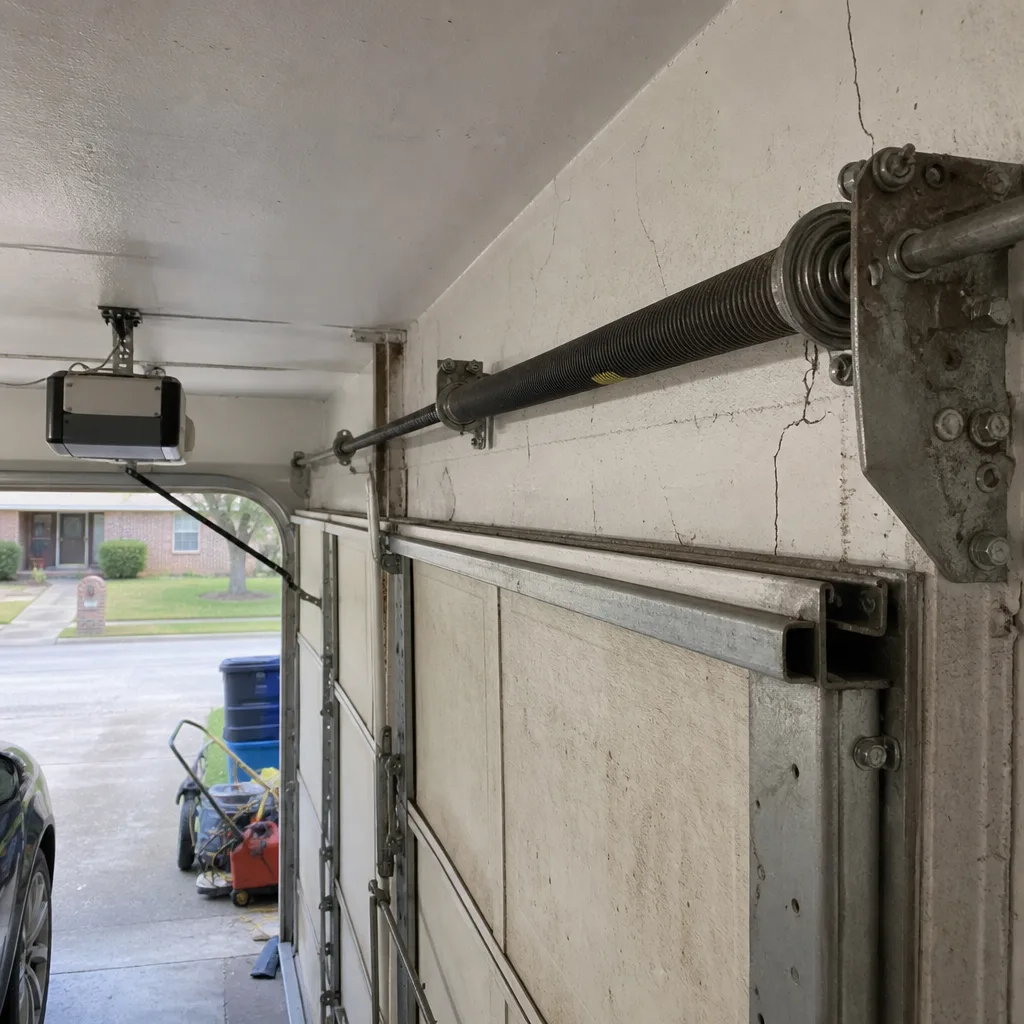 Before
 After
After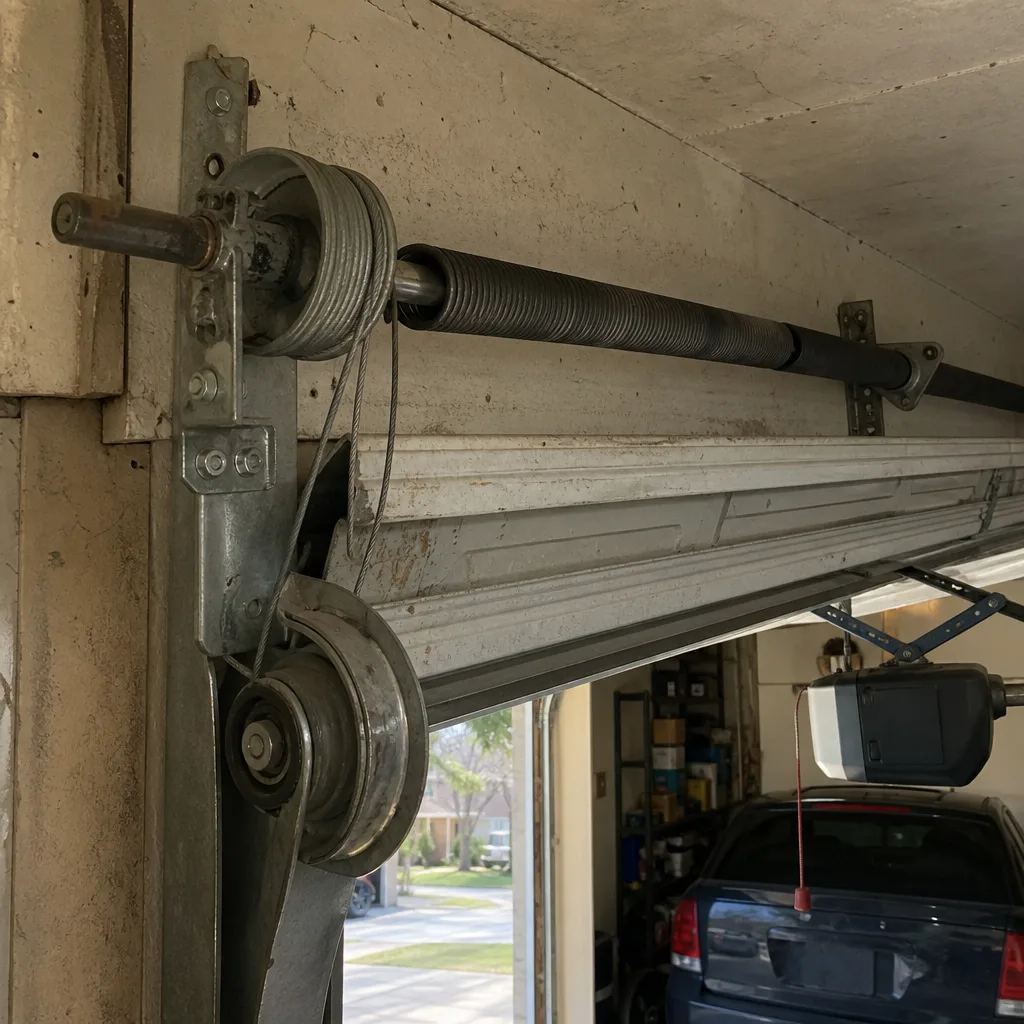 Before
 After
AfterGarage Door Warning Signs: A Garland Homeowner’s Reference Guide
A grinding noise and a scraping noise are not the same problem. One means a roller bearing is dry and complaining. The other means a cable is fraying against a drum and the door can come down on its own without warning. Most homeowners can’t tell them apart, and the generic advice online (“listen for unusual noises”) does not help. This guide tells you exactly what each sound, movement, and visual cue means, which part is failing, and whether you need to call today or just schedule it for next week. By the time you finish reading, you will know more about your garage door than the last two technicians who quoted you. That is the standard we hold ourselves to in Garland.
Quick Answer
The garage door warning signs that matter in Garland fall into four categories: sounds that point to specific failing parts (grinding equals bad rollers, popping equals a breaking spring, scraping equals cable or track damage, rattling equals loose hardware), visual cues like an uneven floor gap or a rust bloom on one spring, slow operation that reveals a dying torsion spring, and a failed safety-reverse test that means do not use the door until it is fixed. If your door makes any noise it did not make six months ago, or does not reverse when it hits a 2×4 laid flat on the ground, call a garage door professional in Garland the same day. Delaying a spring or cable failure is how cars get trapped, how panels get bent, and how a $190 spring replacement becomes an $1,800 door replacement.
Table of Contents
- Sound-by-Sound Diagnostics: What Your Garage Door Is Telling You
- Visual Warning Signs You Can Spot Without Touching the Door
- Why a Slow Door Is the Most Dangerous Warning Sign
- The Monthly Safety Reverse Test Every Garland Homeowner Should Run
- Rust, Climate, and What Garland Weather Does to Garage Doors
- Honest Triage: DIY, Call This Week, or Park Outside Tonight
- Common Mistakes to Avoid
- When to Call a Professional
- Frequently Asked Questions
- The Bottom Line
Sound-by-Sound Diagnostics: What Your Garage Door Is Telling You
A garage door is a system of about 40 moving parts, and each one has its own failure noise. The problem is that most people lump every sound into “the door is making noise again” and then do nothing. Here is what each specific sound means in a Garland garage, and how urgent the underlying problem actually is.
Grinding: The Roller Bearing Is Dying
Grinding sounds like metal scraping against metal in a circular rhythm, one pulse per roller as the door passes it. This is almost always the ball bearings inside a roller seizing up. Nylon rollers with sealed bearings last 10-15 years in Garland’s climate; steel rollers without serviceable bearings last half that. When a bearing seizes, the roller stops rolling and starts sliding, which means it is grinding a flat spot into the track. Left unaddressed this scores the track, and a scored track means the door binds, the opener strains, and the whole system works harder until something else breaks. New rollers are cheap. New tracks are not. If you hear grinding, have the rollers inspected this week. If you ignore grinding for months, you will also need the tracks.
Popping or Snapping: The Spring Is Coming Apart
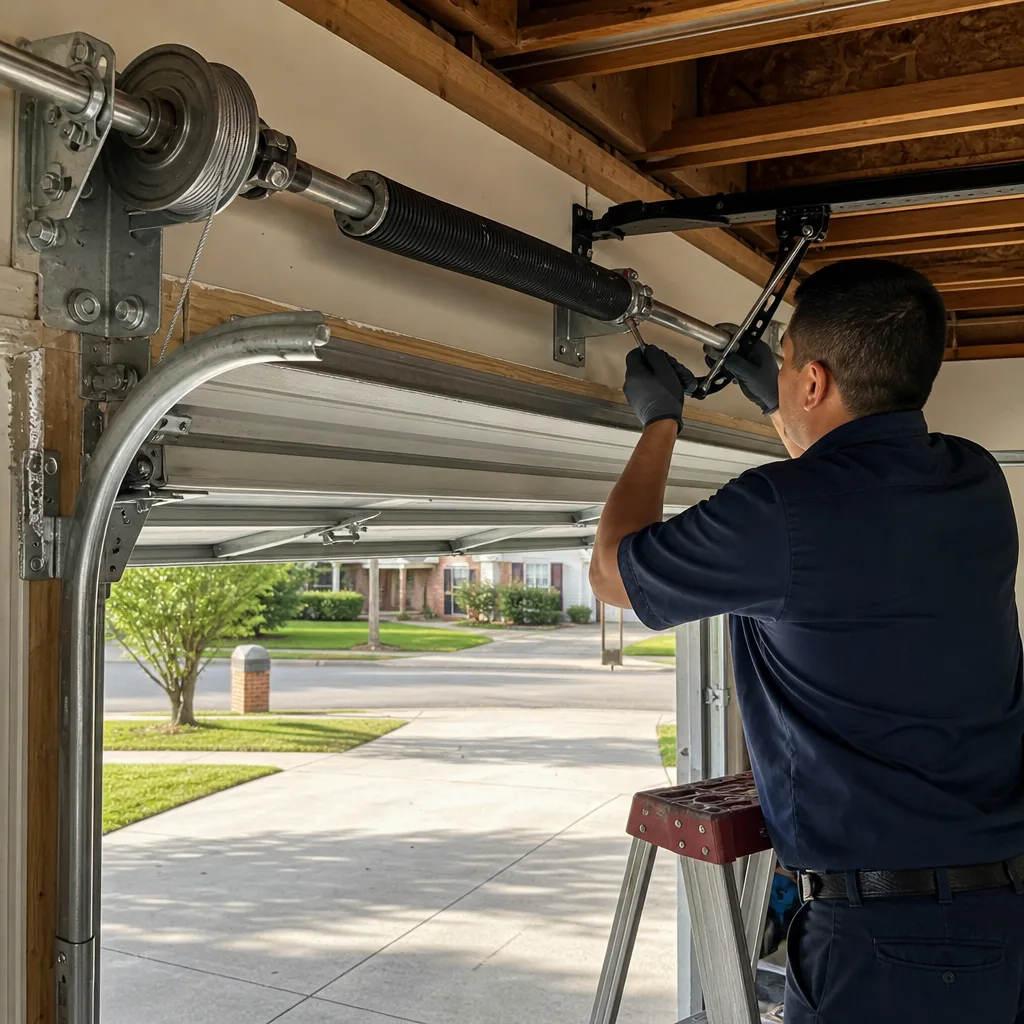
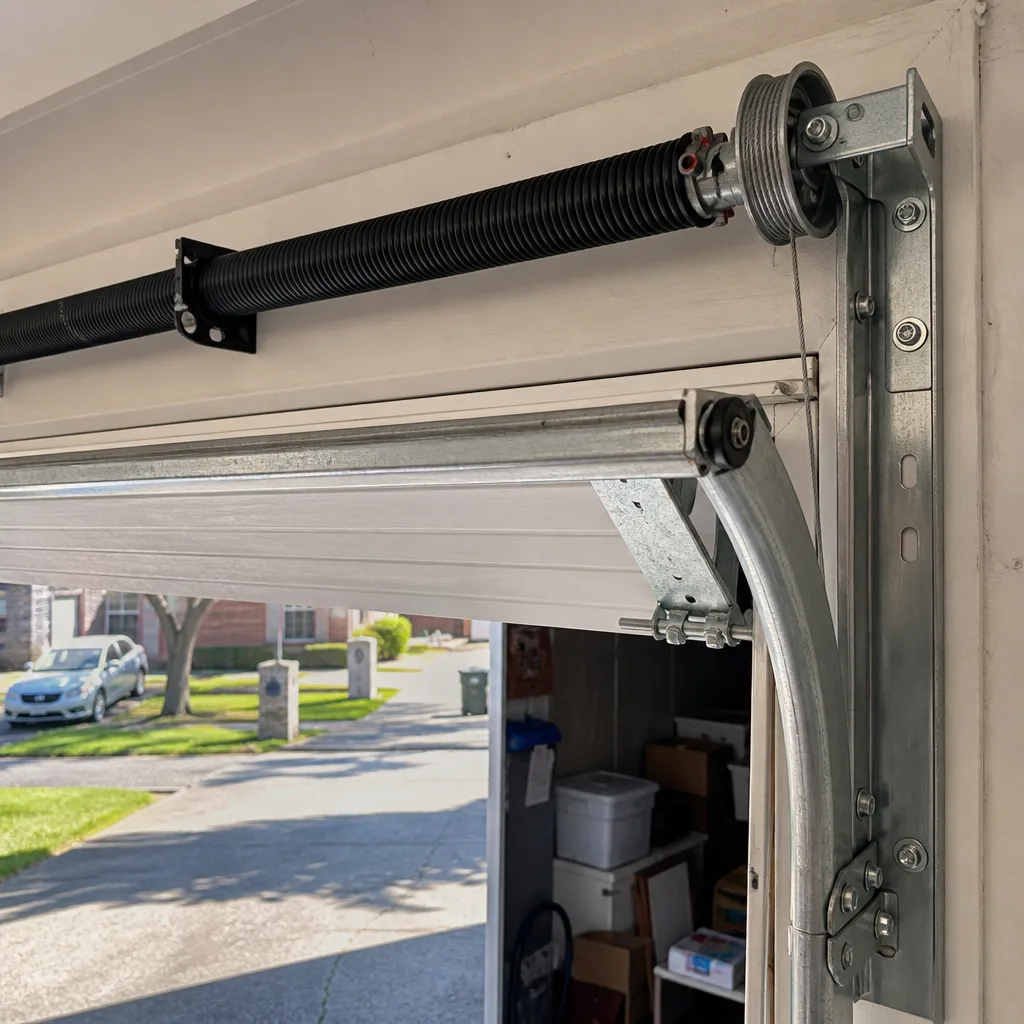
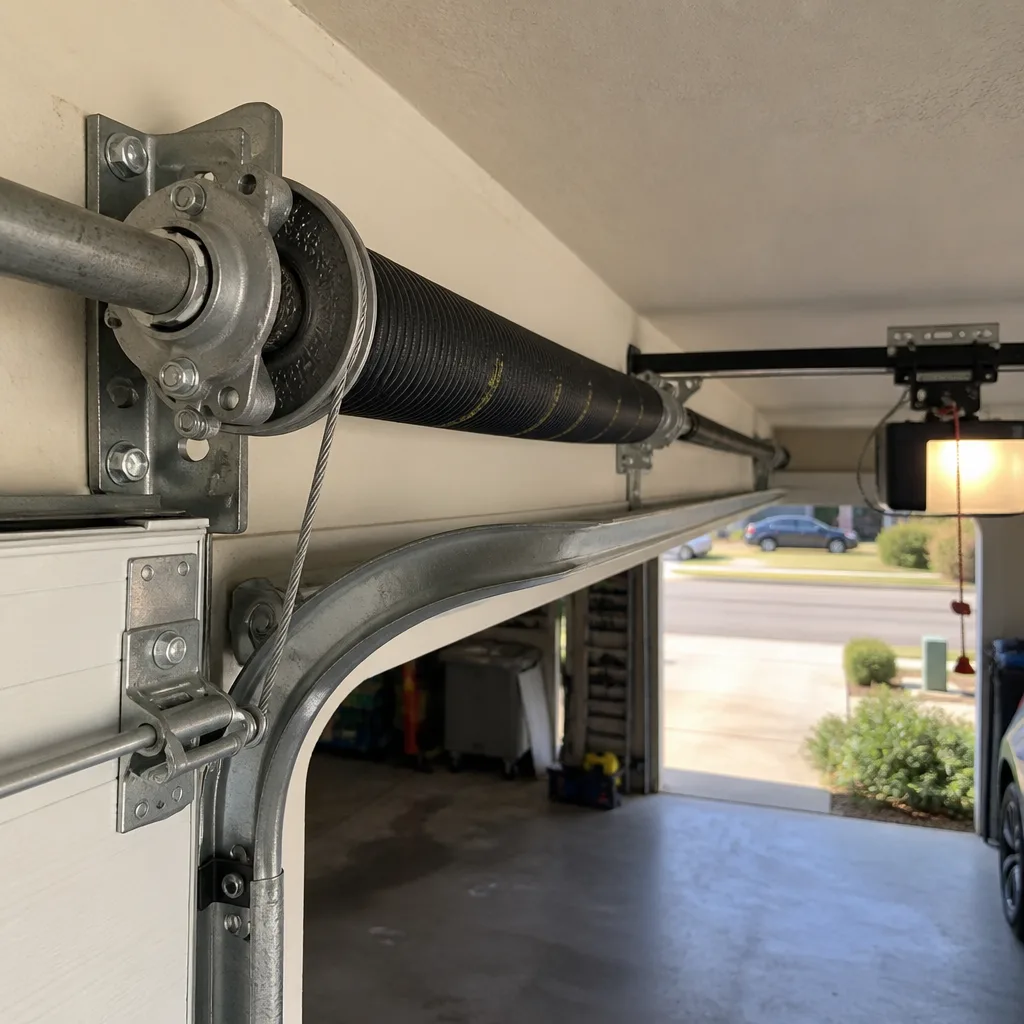
A popping noise while the door is moving, usually heard as a series of sharp pops like cracking knuckles, means a torsion spring is beginning to fail. Torsion springs are the long coiled metal bars mounted above the door opening. They hold the actual weight of the door, which is typically 150-300 pounds depending on the panel construction. When a spring reaches the end of its cycle life, the metal fatigues and starts cracking strand by strand. Each pop is a coil strand letting go. This is the most urgent sound on this list. When the spring finally snaps, the full weight of the door transfers to whatever is under it. If a car is halfway through the opening, the panel lands on the roof. If a person is under it, the outcome is worse. In our 29 years serving Garland, we have never seen a popping spring last more than two weeks. Call the same day you hear it.
If a torsion spring snaps completely, you will hear it. Homeowners describe it as a gunshot or a car backfiring, loud enough to wake them from the front bedroom. That is the sound of the spring letting go all at once. Do not operate the door manually or with the opener when this happens. Disconnect nothing, touch nothing, and call a professional who carries replacement springs on the truck.
Rattling: Loose Hardware, Tighten Soon
Rattling is a vibration noise, like a set of keys shaking on a hook, and it usually happens at the start of the door’s travel or when the door passes through the curved section of track. This is loose hardware: hinge bolts, track brackets, or the opener rail mounts. It is the most common sound on older doors and the least dangerous. A door that has cycled 10,000 times will have shaken loose a few lag bolts. The fix is a socket wrench and an hour on a ladder for someone who knows which bolts to check. But be careful about tightening things yourself if you do not know the torque sequence, because over-tightening a hinge bolt against a rusting panel can crack the panel face. If the rattling is coming from the opener rail specifically, the opener needs to be re-seated against the ceiling. This is a schedule-it-this-week item, not an emergency.
Scraping: The Cable Is Fraying or the Track Is Bent
Scraping is the sound you cannot afford to ignore. It is a continuous, dragging metal-on-metal sound that lasts the entire travel of the door, not just a pulse per roller. In Garland doors with side-mounted tracks, scraping almost always means one of two things: the torsion cable is fraying and dragging against the cable drum, or the track itself has been knocked out of alignment and the door panel is scraping against the track wall.
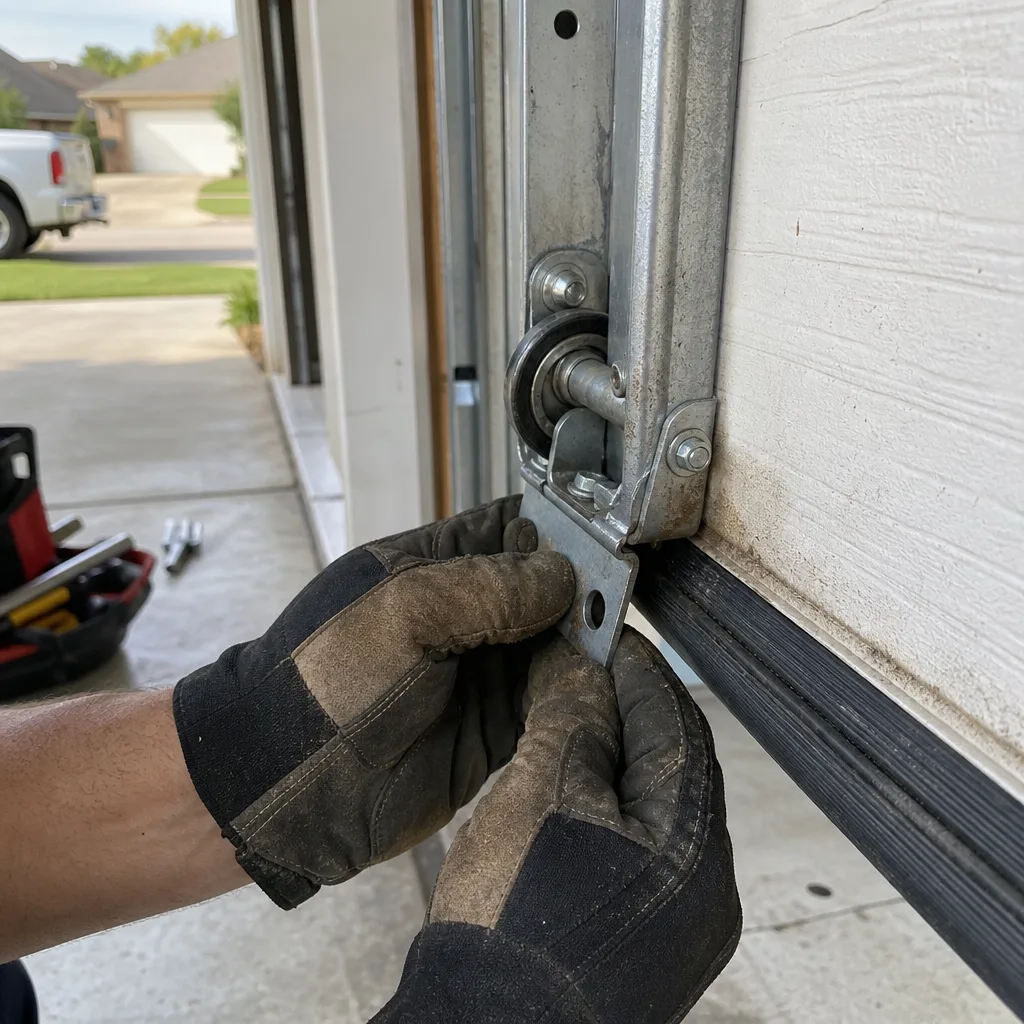
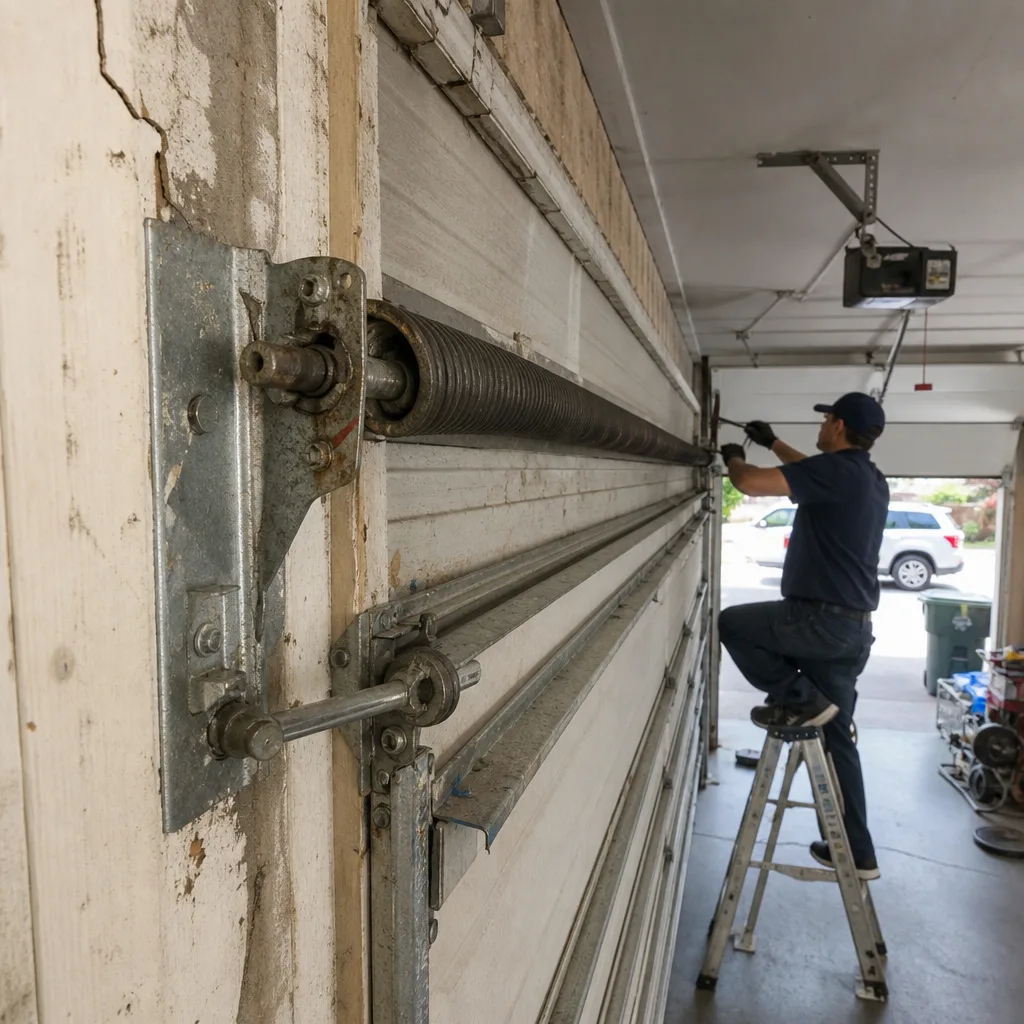
A fraying cable is the quiet cousin of a snapping spring. The cable is what transfers the spring’s tension to the door, and when it frays, individual wire strands start poking out and dragging against the drum as the drum turns. You can see this from the side of the door without touching anything: look for what appears to be a fuzzy wire wrapped around the drum at the top of the track. If you see it, do not operate the door. A snapped cable under tension is a projectile risk, and a door with only one cable attached will drop crooked and bind in the track. This is a call-today item, and you should park outside until it is fixed.
A bent track produces a similar scraping sound but is usually caused by an impact, not wear. A car bumper taps the track, a basketball hits the sensor arm, a lawn mower handle catches the bottom bracket. The door still moves, but the rollers are now forcing their way through a channel that is no longer straight. The fix is often just re-aligning the track with a level and re-torquing the brackets. But if the track has been running out of alignment for months, the rollers have worn a channel into it and the whole section needs replacing. Either way, this is a same-week call.
One more note on the subject, because we see this in Garland more than anywhere else we have worked: the opener is almost never the source of a scraping sound. If the opener is straining, the problem is almost never the opener. It is resistance from the door: a bad roller, a bent track, or a spring that is no longer lifting its half of the weight. Replacing the opener without fixing the door just burns out another opener in eighteen months.
Visual Warning Signs You Can Spot Without Touching the Door
Sounds are easy to miss because you are usually inside the house or sitting in the car when they happen. Visual tells are better because you can check them on a Saturday morning with a cup of coffee in hand. Here is what to look for, and what it means.
The Uneven Floor Gap
Close the door completely and kneel down at the center of the opening. The gap between the bottom of the door and the garage floor should be uniform from left to right. If one side touches the floor and the other side has a half-inch gap, that is the first sign of a door that is no longer traveling level. Two things cause this: a spring that has lost tension on one side, or a cable that has slipped one notch on the drum. Both mean the door’s weight is no longer distributed evenly, which accelerates wear on every other component. You can still operate the door in this condition, but you should not do it for weeks. Schedule a spring tension and cable alignment inspection.
Asymmetric Cable Tension, Visible from the Side
Stand to the side of the door and look up at the cable drums above the tracks. On a healthy door, both cables should be snug against the drum, with no slack hanging anywhere between the drum and the bottom bracket. If one cable looks loose, or if one cable has developed a slight bow while the other is tight, the door is going up crooked. Crooked means the panels are scraping one track, the rollers on that side are bearing extra load, and the opener is fighting against the imbalance every cycle. This is the quiet killer of garage door openers. We have replaced openers in Garland homes where the opener itself was only four years old, but the cable had been slack for two of those years. A $25 cable adjustment would have saved a $450 opener.
Rust Bloom: Location Tells the Story
Rust is not a single warning sign; it is a diagnostic clue whose location points to the failing part. A rust bloom on the torsion spring, especially at the ends where the spring mounts to the bracket, means the spring metal is oxidizing and weakening. Springs under tension plus surface rust plus the humidity swings we get in North Texas when a spring storm rolls through in April equals a spring that is more likely to fail. A rust bloom on the track brackets or hinges is less alarming, because those are not under the same load. Clean it, treat it, and move on. But rust on the spring itself is a replacement indicator, not a cosmetic concern. A door is 200 pounds riding on two springs. Respect it.
The Panel That Does Not Sit Flat
If you look at the closed door from inside the garage and one panel bows outward or inward compared to its neighbors, the panel has taken a hit at some point and the internal metal frame has bent. This is not an urgent safety issue on its own, but it becomes one when the bowed panel starts binding against the weather stripping and catching the track. A bowed panel is also the first thing a buyer notices when you sell a house in Garland. If the bow is visible from ten feet away, budget for panel replacement within the year.
Why a Slow Door Is the Most Dangerous Warning Sign
A door that “works fine but takes longer than it used to” is the most dangerous door on a Garland street. Here is why: spring fatigue is invisible until the final failure, and the only early symptom is a gradual slowdown in the door’s travel speed. A properly balanced door moves at a steady clip, about 8-10 inches per second on a standard 7-foot door. A door with a dying spring moves at 4-6 inches per second, and the slowdown happens over months, so the homeowner does not notice. They just know the door “feels slower lately.”
Torsion springs are rated in cycles, not years. A cycle is one full open and one full close. The average cycle rating on production-grade springs sold by most installers is 10,000 cycles. If you open and close your door four times a day (two cars leaving in the morning, two returning in the evening), that is 1,460 cycles per year. Ten thousand cycles divided by 1,460 means the spring is mathematically dead in just under seven years. Garland homeowners who use their garage as the main entry door, which is common in the neighborhoods around Firewheel and south of the lake, cycle the door six to eight times a day and burn through a stock spring in five years or less.
The slowdown is the spring telling you it is down to its last few hundred cycles. The coil has stretched and lost its stored energy, so the opener motor is doing more of the lifting work. Opener motors are not designed to lift a door; they are designed to assist a balanced door. Every cycle the opener runs against a weak spring shortens the opener’s life by more than one cycle. It also means the spring can fail at any moment, and when a torsion spring fails under full tension, the door drops. The opener’s brake may slow the fall, but it will not stop a 200-pound door from coming down hard. If you have noticed the door moving slower than it did last year, call for a spring inspection this week. I count spring cycles the way you count tire miles. I will tell you what is left on yours.
The Monthly Safety Reverse Test Every Garland Homeowner Should Run
Since 1993, federal law has required every residential garage door opener sold in the United States to include an automatic reversal feature. The door must reverse when it encounters resistance while closing. This is the single most important safety feature on the system, and the only way to know it works is to test it. In our experience walking through Garland garages, roughly one door in six fails this test, usually because the sensitivity setting has drifted or a sensor eye has been knocked out of alignment. Here is the test.
How to run the test:
- Close the door completely using the opener.
- Lay a 2×4 piece of lumber flat on the floor directly under the path of the door. If you do not have lumber, use a full roll of paper towels. Do not use anything breakable or anything you do not want dented.
- Press the wall button or remote to close the door.
- Watch what happens when the door contacts the object.
What the result means:
- Door reverses immediately upon contact and returns to the open position: The safety reverse is working. Test this monthly, and you have done your job.
- Door reverses only after compressing the object significantly, or after a visible delay: The sensitivity setting is too low. This is fixable by adjusting the force dial or digital setting on the opener, but if you do not know which dial does what, you can make it worse. Call a professional to calibrate it, especially if children or pets enter the garage regularly.
- Door does not reverse at all and just keeps pressing down: Do not use this door. Disconnect the opener from the door (the red emergency release cord) and call a professional the same day. The door is not safe to operate with the opener until the reversal mechanism is repaired.
There is a second test for the photoelectric sensors, the two small eyes mounted about six inches off the floor on either side of the door opening. With the door open, press the button to close it, then wave your foot through the beam between the sensors while the door is moving. The door should reverse. If it does not, the sensors are misaligned, blocked, or one has failed. This is the leading cause of “the door won’t close” calls in Garland, and it is usually a five-minute fix. But if you watch the sensors and one eye is blinking, the alignment is off, not the wiring. A blinking sensor eye means it is not seeing its partner. An eye with no light at all means no power or a failed sensor.
Rust, Climate, and What Garland Weather Does to Garage Doors
Garland sits in a climate that is hard on moving metal parts. We get the humidity of East Texas pushing in during late spring, the dry heat of the high plains in July and August, and the occasional ice storm that freezes a door to the slab in February. Those swings do three things to a garage door system. First, the humidity accelerates rust on any exposed steel that has lost its protective coating, particularly at the ends of torsion springs where the coil meets the bracket. Second, the temperature swings cause metal to expand and contract, which works bolts loose over time and produces the rattling sound described earlier. Third, when a freeze settles in, any moisture that has collected in the bottom weather seal freezes solid, and if a homeowner hits the opener button while the door is frozen down, the opener burns itself out trying to break the ice. We see this every winter in Garland, and the fix is preventive: replace cracked bottom seals before December and run a bead of silicone along the bottom edge of the door each fall. If your door has frozen down, do not force it. Wait for the thaw, then have the weather seal inspected.
Rust on the spring is the climate warning sign that matters most. The spring is under constant torsion, meaning the metal is already stressed to a fraction of its breaking point. Surface rust from Garland humidity is not just cosmetic on a component under that much stress; it promotes the same type of fatigue cracking that eventually leads to the popping sound and the final snap. If you see rust on your springs, take a picture and send it to a garage door professional. A good shop will tell you honestly whether the spring has life left or whether it is time to replace it before it fails in the middle of a July heat wave with your car trapped inside.
Honest Triage: DIY, Call This Week, or Park Outside Tonight
Every garage door warning sign falls into one of three buckets. Here is the honest breakdown of which bucket is which, based on what we have seen in thousands of Garland homes over the past two decades.
Bucket One: You Can Handle This Yourself
- Fresh rattling that has not progressed to grinding: Tighten visible hardware with a socket wrench. If you do not own a socket set or cannot reach the bolts safely from a ladder, skip to bucket two.
- Cracked or missing bottom weather seal: This is a peel-out, press-in replacement that most homeowners can do with a utility knife and a mallet. We sell the replacement seal stock at our Garland shop, and we will show you how to cut it to length before you leave.
- Dirty or obstructed sensor eyes: Wipe both lenses with a dry cloth and make sure nothing is stacked within a foot of the beam path. If the door still reverses, the alignment is off and it is bucket two.
- Lubrication maintenance: Spray a garage door-specific lithium or silicone lubricant (never WD-40) on the hinges, rollers, and the spring itself once every six months. This is the single highest-value maintenance task a Garland homeowner can do, and it takes fifteen minutes.
Bucket Two: Call This Week
- Grinding noise from the rollers: Rollers are cheap; tracks are not. Find a shop that carries rollers on the truck and schedule the visit before the grinding becomes a track replacement.
- Rattling from the opener rail or ceiling mount: The opener needs to be re-seated. This is routine work for a garage door professional and should take under an hour.
- Uneven floor gap or slack cable visible from the side: The door needs a balance and cable alignment. This is a same-week appointment, and the fix is almost always a spring tension adjustment rather than a part replacement.
- Slow operation without any new sound: This is the spring telling you it is near the end of its rated cycles. Get an inspection this week. March and April are the busy season in Garland, so the earlier in the week you call, the more flexibility you have on scheduling.
Bucket Three: Park Outside Tonight
- Any popping sound from the spring area while the door moves: The spring is failing. Every pop is a strand letting go. Do not operate the door, and be especially careful not to stand under the opening while the door is up.
- Visible frayed cable or a cable that has jumped the drum: A snapped cable under tension can whip. A door with one cable can drop crooked. Do not use the door, and if your car is inside, leave it there until the repair is done.
- Door that fails the safety reverse test by not reversing at all: The door is unsafe for your family. Disconnect the opener with the red release cord and leave the door closed until a professional arrives.
- Door that came down faster than normal on the last close, even once: A fast-close event means the spring has lost its balance completely. This door is dangerous. Call a professional in Garland the same day, and if they cannot come today, leave the door closed and enter through the front of the house.
For anything in bucket three, calls are answered by a live person around the clock at Otto’s Garage Door. If a spring lets go at nine at night and your vehicle is sealed inside, the phone rings and a person answers it, the quote is given on that call, and the number does not change when the truck pulls into your driveway. That is the whole arrangement, written on the invoice for ninety days afterward.
Common Mistakes to Avoid
- Ignoring a popping sound because “the door still works.” The popping is the spring announcing its retirement. Ignoring it saves nothing and risks a door falling on a car, a pet, or worse. When the pop starts, the clock is running.
- Lubricating everything with WD-40. WD-40 is a solvent, not a lubricant. It will strip any remaining grease off the rollers and leave the metal dry, which accelerates the grinding. Use a silicone or lithium spray labeled for garage doors or do not lubricate at all.
- Replacing the opener when the real problem is the spring. If the door is slow, noisy, or struggling, the opener is reacting to a door problem, not causing it. We have pulled three-year-old openers out of Garland garages that were burned out by five-year-old springs the homeowner did not know were dead.
- Attempting to adjust or replace any spring, cable, or bottom bracket yourself. Torsion springs are under enough tension to kill you if they release while you are working on them. Same with cables. No amount of YouTube confidence changes the physics. Leave the high-tension components to a trained professional.
- Ignoring a sensor eye that is blinking. A blinking sensor does not mean the sensor is broken. It means the beam is misaligned, so the door thinks something is in the way and refuses to close. This is almost always a bracket tap or a nudge back into position. If you ignore it for months and just hold the wall button down to force the door closed, you are overriding a safety feature that exists to protect your family.
- Running the door with snow or ice built up along the bottom edge. In Garland’s occasional freeze events, a door frozen to the slab will either burn out the opener or rip the bottom bracket off the panel. Let it thaw. The seal replacement can wait a day.
- Ignoring rust on the torsion springs because “it is just surface rust.” On a spring under 2,000+ pounds of stored torsion, surface rust is the first step in a fatigue failure. It is not a cosmetic issue on that component.
When to Call a Professional
If your door makes a popping sound, has a visibly frayed cable, fails the safety reverse test by not reversing, or has come down faster than normal even once, stop using the door and call a professional in Garland the same day. If your door is grinding, running slow, sitting uneven at the floor, or rattling from the opener rail, schedule an inspection this week. The difference between a $190 spring replacement and an $1,800 door replacement is often just the two weeks between “that sound is new” and “the whole thing came down.” Otto’s Garage Door offers free estimates everywhere in Garland, and the price quoted on the phone is the price on the invoice. Call (945) 202-2600 to have someone who knows the difference between a grinding roller and a scraping cable take a look, usually the same day.
If you are still unsure whether your issue is urgent, start with Otto’s Garage Door home and read through the service descriptions, or go straight to Garage Door Repair in Garland for a breakdown of what each repair actually involves. For doors that have reached the end of their useful life, the Garage Door Installation in Garland page covers what a replacement costs and how long it takes. And if you are dealing with a door that opens and closes normally but the opener itself is acting up, the Garage Door Opener in Garland page explains what fails on openers and what is worth fixing versus replacing.
Frequently Asked Questions
A garage door spring that is going bad makes a popping or snapping sound while the door moves, causes the door to operate noticeably slower than it did six months earlier, or shows visible rust bloom on the coil ends. Any one of these means the spring is near the end of its rated cycles, and the door should not be used until a professional inspects it. Call (945) 202-2600 for an exact quote, estimates are free.
A garage door usually makes a popping sound, like cracking knuckles, in the days or weeks before a torsion spring snaps. The pops are individual coil strands breaking under fatigue. If you hear popping, stop using the door and call a professional in Garland the same day.
Garage door repair in Garland typically runs $120 to $350 for common fixes like roller replacement, cable realignment, sensor alignment, and opener force calibration. Spring replacement runs $180 to $380 installed depending on the spring rating and the quality of the replacement part. Track replacement and panel replacement run higher because of materials. Every job at Otto’s Garage Door is quoted before the visit and the number does not change at the door. Call (945) 202-2600 for a written estimate.
You can handle lubrication, weather seal replacement, sensor cleaning, and bolt tightening yourself. You cannot safely handle torsion springs, cables, or bottom brackets; those are under enough tension to cause serious injury or death if they release. Anyone who tells you different is not doing you a favor.
No. The price quoted on the phone at Otto’s Garage Door is the price on the invoice, and it is backed by the 90-Day Done Right Promise in writing on every job. If something unexpected is found during the repair, it is discussed before any additional work starts, never after.
Yes. Otto’s trucks are stocked with torsion springs in common sizes, cable sets, rollers, hinges, sensors, and opener parts, across LiftMaster, Chamberlain, Genie, Clopay, and Amarr systems. Most repair calls in Garland are completed on the first visit. Call (945) 202-2600 and a live person answers, even at nine on a Saturday night.
The Bottom Line
A garage door is a mechanical system that cycles thousands of times a year, and every component in it has a rated lifespan. The warning signs in this guide are not vague suggestions; they are specific noises, visible cues, and test failures that point to specific failing parts. Grinding means rollers. Popping means springs. Scraping means cables or tracks. Slow means spring fatigue. A failed safety reverse means the door is not safe for your family. The difference between a $120 repair and an $1,800 door is usually the time between noticing the sign and making the call. If anything in this guide matches what your door is doing, call Otto’s Garage Door at (945) 202-2600. We have been answering the phone in Garland since 2004, and we will tell you honestly whether it is a today call, a this-week call, or something you can handle with a socket wrench and a cup of coffee.
Written by Otto Reinhardt, Owner at Otto’s Garage Door, serving Garland since 2004.